
Unpredictable Deluge:
The 2012 Malaysian Grand Prix

The second round of the 2012 Formula 1 championship at Sepang in Malaysia was an eventful one, if only because of the weather.
Most of the kinks having been worked out of the new 2012 cars, qualifying was less a parade of second-stringers than in Melbourne a week ago. For the second straight week, Lewis Hamilton clinched the pole, flanked by his teammate Jenson Button for a solid McLaren front row. If this season seemed to be shaping up to be dominated by McLaren in the manner last year was owned by Red Bull, and specifically Sebastian Vettel (who qualified 6th this week), the actual race would debunk that notion.
Malaysia’s unpredictable weather not only meant the rain came and went within the span of half an hour, it also made some parts of the circuit relatively dry while others were practically flooded. The net result was that tire strategy and driving skill came to the fore like it had in few other F1 races in recent memory.
Cars switched continually between full wet tires and intermediates, some drivers opting for slower but safer full wets, and others electing to continue on the intermediates in the hopes the rain would subside and they would save themselves a pit stop. And after much shuffling of the field and a remarkably low number of retirements given the poor conditions, along with a full stop of the race when the downpour was at its most intense, Ferrari driver and two-time world champion Fernando Alonso emerged far ahead of the rest of the field, tailed only by rookie Sauber driver Sergio Perez. The latter put up a good fight against the faster Ferrari, but ran wide during an attempted overtaking maneuver late in the race and had to concede the win to Alonso.
I was pleased with the outcome. I like Ferrari’s quasi-underdog status this year, and Alonso is an excellent, solid driver whose talent has been proven in a number of different machines. It was a hard-earned win, and will hopefully inject some confidence (as if any were lacking) back into the Maranello team after a few seasons nipping at the heels of Red Bull and McLaren.
On an aesthetic note, I noticed something about the cars that had been built into their design since the beginning of the season, but I just now caught: Most of them are shovel-nosed, like so:
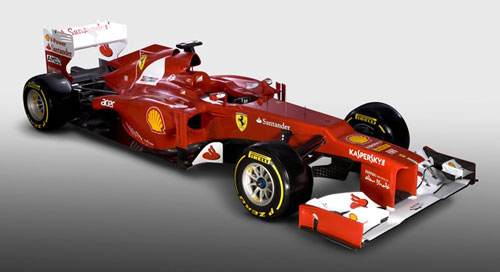
Apparently, there was a regulation change that lowered the maximum height of the nose, but retained the max height of the structure supporting the driver, and as a result, most constructors have adopted a “stepped” nose design. It may be functional, but good gosh, can you say “Ugliest F1 cars ever?” They’re just terrible.
Underrated Lookers: The ’93-’01 Subaru Impreza

A discussion of the Subaru Impreza could have fit into a couple categories: The one it’s featured under, Underrated Lookers; or another one, Sophomore Slumps. The grounds for its inclusion under the latter would been the atrocious, bug-eyed styling visited upon the second-generation car; however, apart from its looks, the 2nd gen is actually a brilliant machine: relatively lightweight, tossable, simple, rugged and easy to tune for power. It certainly isn’t slumping as far as its dynamics. So, by process of elimination, the first-generation ’93-’01 Impreza slots into the category you see; and I might add, one that it fits very well.

It’s one of Subaru’s most cohesive designs. Even with the addition in later years of rally-racing-themed scoops, vents, spoilers and lighting, the basic shape still looks understated, handsome and capable. Chiefly responsible for the ’93-’01 Impreza’s visual impact are its simple-yet-aggressive grille treatment, its athletic stance and especially its subtly-flared fenders, which give the car an ever-so-slight waisted look. The effect emphasizes Subaru’s characteristic AWD system and the fact that tractive power can be transmitted through the tires’ contact patches at all four corners. The fender flares also make the car look lithe, agile, nimble and playful. It’s a car that invites a drive, in other words.

Even the four-door form looks fresh, as the automaker wisely decided to retain all the key styling features from the coupe version. Both body styles shared all underpinnings, in the same way that BMW 3 Series coupes and sedans are mechanically identical, and to this day I (and most enthusiasts) lament the fact that Subaru declined to market the very fast, turbocharged variants of the Impreza—the WRX and WRX STI—in North America (the rest of the world got them). No, we had to make do with a naturally-aspirated, 165-hp 2.5l flat-4 and wait until the arrival of the 2nd generation car for forced induction and real speed. So we American enthusiasts are placed in the awkward position of having to decide between looks (1st gen) or factory speed (2nd gen). Unless, that is, one was willing to undertake an engine swap and combine the best of both, which in this case might be the way to go for the Subaru buff who wants to construct a modern classic.
Editor’s note: This post is part of an ongoing series featuring cars whose design I find appealing, in contrast to mainstream opinion. Read the other installments here:
Datsun 240Z Restoration:
Inspiration (Sort Of)

Well, I had good intentions.
Last night, I brought my good camera to my second monthly Triad Z Club meet, and even arrived a bit early, hoping to snap some nice pictures of Z-cars for inclusion here, but…on the way to the meet, the sky decided to fall down.
Absolutely torrential spring rains pelted my car on the highway, and cleared up abruptly a few miles before my exit, only to start again once I reached the meet location. Several brave souls had actually driven their Zs, but I had to rush inside when I arrvied, and it was dark and still drizzling when we left. So none of the pictures I did take are of display quality, to say the least.

In their place, then, I present a few photos of previous year Triad Z Club meets, generously forwarded to me by the club’s president. There are many more; I just picked out several of the better ones. Hopefully they convey a sense of how significant membership in a local group can be when it comes to maintaining motivation during a long restoration project. I attend the meetings as much for the camaraderie as for the chance to see “my car, done” in the flesh at least once a month.

The silver lining to the whole rainy evening (besides the conversation) was the fact that I’m tentatively slated to take over some, if not all, of the club website-related responsibilities, including putting together an e-mail list or online forum. I’m excited to be able to contribute to the group in such a way.
Editor’s note: This post is Part 11 of an ongoing series chronicling my efforts toward the restoration of my 1972 Datsun 240Z, originally my father’s. Read the other installments here:
- Part 23: Gutting the Interior
- Part 22: The Teardown Begins
- Part 21: …And the Engine Comes Out
- Part 20: Treasure Hunting
- Part 19: Beginnings
- Part 18: VIN Discoveries
- Part 17: The Bad News
- Part 16: On The Road
- Part 15: Getting It Back On The Road
- Part 14: It Lives!
- Part 13: Restoring the Fuel System, Part I
- Part 12: Meat on the Wheels
- Part 10: Carbs’ Return
- Part 9: First Triad Z Club Meet
- Part 8: Wheel Work
- Part 7: Tactical Changes
- Part 6: Little Things
- Part 5: Coming Home
- Part 4: The Rollout
- Part 3: Confessions of a Poor Car Enthusiast
- Part 2: Opening the Tomb
- Part 1: Projecting Forward