Design Highs and Lows:
Ferrari + Pininfarina

As long a relationship the Italian automaker has had with the styling house Pininfarina, the latter didn’t pen all Ferrari’s designs; however, they have shaped a significant majority of them. The number of good-looking cars both firms have styled is appreciable, so I thought focusing on the intersection between them, design-wise, would be a less daunting task than attempting name the best and worst design of either one in isolation.
Ferrari engineering and Pininfarina styling have been joined at the hip since the mid-’50s, so there were a myriad of designs to choose from. The pinnacle of their association, though, came in 1965 with the 275 GTB, pictured at top. Combining the sensuality of the 250 GT Lusso (without the delicate femininity) with the muscular aggression of the GTO and Daytona (with none of the brutishness), it best represents everything a Ferrari should be, from then to now. Every line is perfectly placed and urgently communicates a raw, yet refined animalism. It’s the quinessential “iron fist in a velvet glove,” and a stunning achievement.

The more recent ’04-’10 612 Scaglietti, on the other hand, stands as the nadir of the Ferrari-Pininfarina connection. It’s decorated rather than styled, arbitrary features like the side scallops tacked onto otherwise conventional proportions. The front in particular is a disaster: Concave where it should be convex, and vice versa. The headlights and wheels look far too small and give the already large GT an even girthier impression. The styling house really phoned it in with the 612, and the car ended up looking like it was hastily carved from a bar of soap. Sketch a few lines, and…we’re done. Yeah, that’ll do. Next.
It’s understood customers of Ferrari’s larger offerings prefer cars that are a bit more discreet than their rip-snorting sports cars, but the Scaglietti commits the double sin of being boring and ugly. I would say the same about the 612’s successor, the FF, but at least with that car, it looks like they’re trying for something; there’s intent, purpose. Here’s hoping the next big Ferrari GT has some grace and class to go with its power.
Editor’s note: This post is part of an ongoing series where I highlight one example of both excellent and awful design from a noted styling house or designer. Read the other installments here:
Aero-Racing: The Jaguar D-Type

A world-beating 3.8l inline-six engine. Then-radical four-wheel disc brakes. Space-frame construction at the front, monocoque in the rear, with aluminum panels that looked like they had been lifted from a Spitfire. An aerodynamically-refined shape with minimal frontal area. Forget pretenders like the Mercedes 300 SLR and Ferrari 375 MM—the ’54-’57 Jaguar D-Type was the true pinnacle of race car development for its era.

It may be a bit cartoonish, but I can’t think of another car, racing or otherwise, that looks like more of a plane-automobile hybrid, from the rounded body contours mimicking an aircraft fuselage to the tail fin. The latter was critical for stability at the D-Type’s 162 mph top speed, a velocity it hit regularly on the non-chicaned Mulsanne Straight at the 24 Hours of Le Mans—an event it won outright three years in a row, from ’55 to ’57.
The car was an evolution of the successful C-Type, itself a special build of the company’s legendary XK120 roadster. Recognizing the limits of the full space-frame design the C-Type employed, Jaguar engineers took a page from their aeronautical counterparts, fashioning a light-yet-strong monocoque for the car’s rear half while retaining a tubular skeleton for the front, all enveloped in ex-Bristol Aircraft designer Malcolm Sayer’s pioneering, slippery sheetmetal. Powered by a dry-sump version of Jaguar’s proven twin-cam XK engine and arrested by fade-free discs all around, the convergence of engineering excellence took the racing world by storm. And even after the D-Type faded into obsolescence in the late ’50s, its innovations long since having been adopted by other manufacturers, the car would lend much of its design elements—the semi-monocoque chassis, XK engine, aerodynamic focus and disc brakes, among other things—to the acclaimed ’61 E-Type, extending Jaguar’s leadership from the racing to the road car realm. An evolutionary step in the progression from XK120 to E-Type it might have been, but the D-Type’s striking looks and racing success cement it as a icon in my mind.
The New SSC Tuatara and
Top Speed One-Upmanship

Inspired by the recent reveal of the SSC Tuatara‘s wacky/awesome (take your pick) interior, and the car’s stated intent to reclaim for SSC the title of “World’s Fastest Street-Legal Production Car” from the Bugatti Veyron Super Sport, I decided to revisit the evolution of that title over the past 60 years or so.
Here’s the progression since 1949:
- 125 mph: 1949, Jaguar XK120
- 140 mph: 1955, Mercedes-Benz 300SL
- 152 mph: 1961, Jaguar E-Type
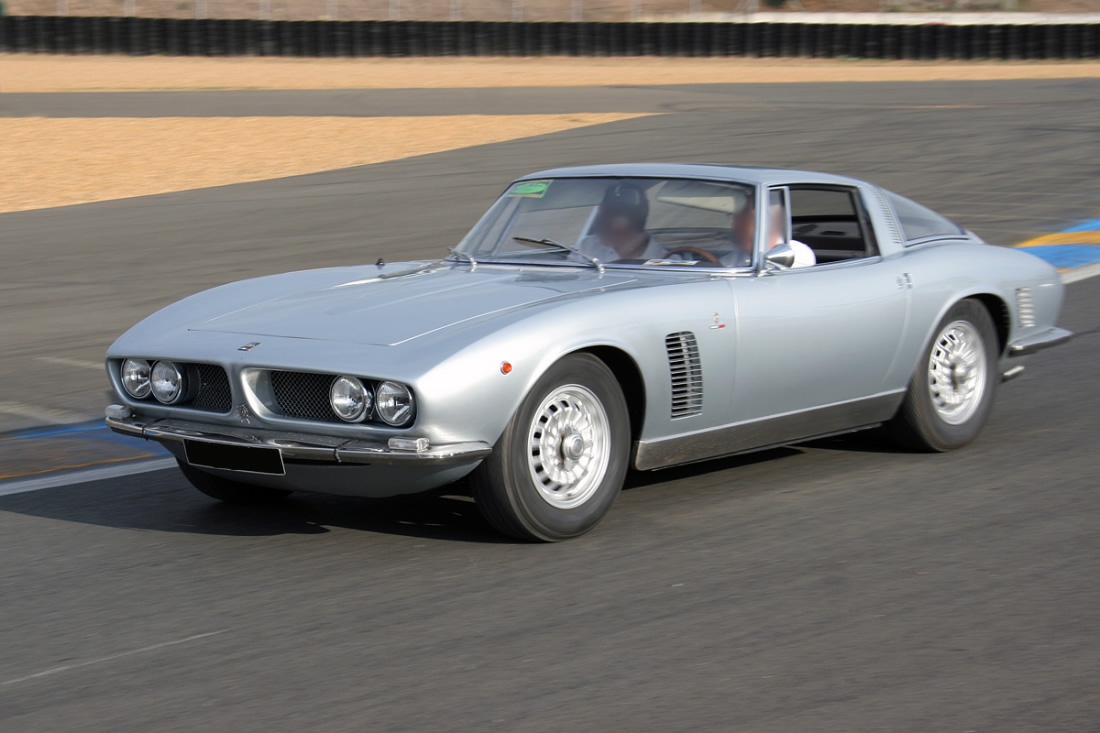
- 161 mph: 1963, Iso Rivolta Grifo
- 171 mph: 1966, Lamborghini Miura
- 174 mph: 1968, Ferrari 365 GTB/4 Daytona
- 188 mph: 1984, Ferrari 288 GTO
- 197 mph: 1986, Porsche 959
- 203 mph: 1987, Ferrari F40
- 213 mph: 1992, Jaguar XJ220
- 231 mph: 1993, McLaren F1
- 241 mph: 2005, Koenigsegg CCR
- 254 mph: 2005, Bugatti Veyron
- 256 mph: 2007, SSC Ultimate Aero TT
- 268 mph: 2010, Bugatti Veyron Super Sport
And here are some observations about the list:
- The three longest record holders were the Mercedes Gullwing at 6 years, the McLaren F1 at 12, and the Ferrari Daytona at a whopping 16 years. The ’70s truly were “the lost decade” for speed.
- The Lamborghini Diablo, emerging in 1990, had a quoted top speed of 202 mph, which beat the Ferrari F40’s listed 201 mph; however, the F40 could hit 203 in practice. Beastly car.
- Although the F1’s record of 231 mph has long been surpassed, it remains the fastest naturally-aspirated car on the list, a testament to the enduring excellence of McLaren’s chassis and BMW’s engine development.
- The Koenigsegg CCR held the record for the shortest amount of time: a month and a half between late February and mid-April ’05, when it was surpassed by the Veyron.
- I’m embarrassed to say I hadn’t even heard of the Iso Grifo before compiling the list. It’s a shame, really, since it’s a stunning car. Hmm…future article fodder?
- Driving any of the listed cars at top speed (with the possible exception of the F1 or 959) is probably a truly terrifying experience, but from all I’ve heard, 171 mph in the Miura would take the cake as the most hair-raising ride of all. The groundbreaking Lambo is little more than a pretty shell with a transverse V12 shoehorned in amidships—little to no chassis tuning or finesse, negative downforce. Yeesh.
- The upcoming Tuatara’s quoted top speed is 276 mph, an increase of 8 mph over the Veyron. I remember when 200 mph was the “barrier;” how much longer until we’re topping 300??