Spannerhead Dot ComSpannerhead.com

Posts filed under ‘Datsun’

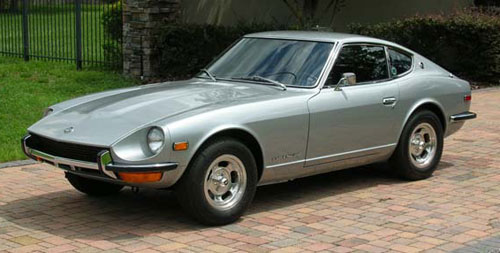
Datsun 240Z Restoration:
Confessions of a Poor Car Enthusiast
November 23, 2011 by Matt

901 Silver Datsun 240Z 240-Z HLS30 S30 Nissan

I finally figured it out. After two and a half years—maybe longer—I discovered the missing piece of the existential puzzle that is my “car promiscuity.”

Since acquiring my driver’s license in ’95, I’ve been through a lot of cars. But more recently, since mid-’09, I’ve made a series of car swaps I couldn’t really justify. Obviously, my automotive flexibility as a husband, dad and homeowner is radically more constrained than it was when I was single, child-less and renting. That said, ever since my car interest “reopened” in mid-’09, I’ve felt this sort of restlessness, discontent, some kind of inexorable force pulling me from one car to the next, searching for what I knew not.

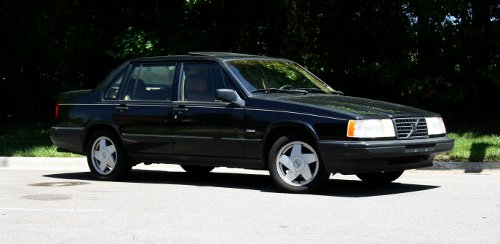
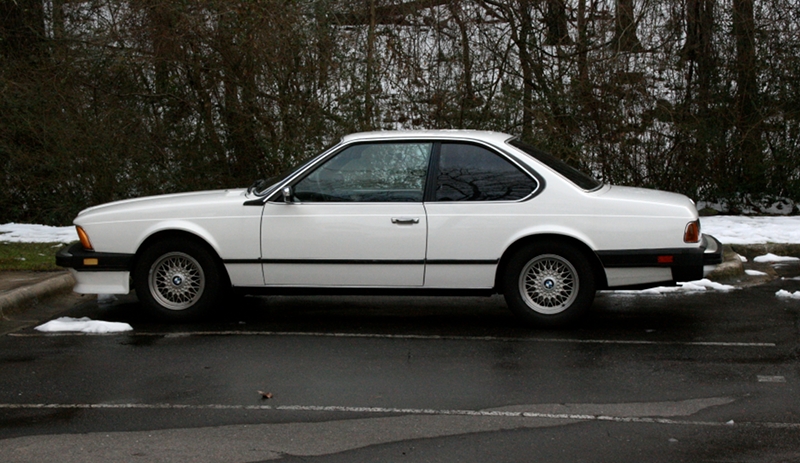
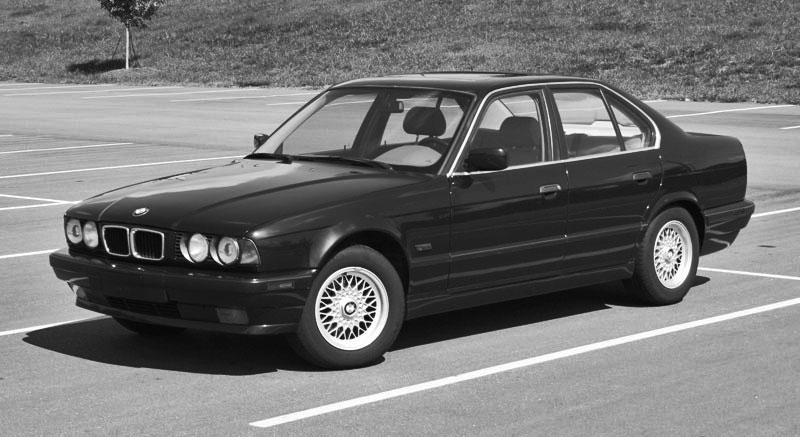
Let me explain our family’s car arrangement. We had established a while ago that there were three “slots” for cars to fill: The family hauler, the daily driver and the project car. The minivan has filled the first slot; no real drama there. The project car slot has been occupied, since late ’01, by my Datsun 240Z. The daily driver slot, in contrast, has seen a remarkable amount of turmoil and turnover. Starting in mid-’09, I’ve been through a ’93 Volvo 940 Turbo, an ’01 VW Jetta TDI, an ’86 BMW 635CSi, a ’95 BMW 525i and I had been searching for its successor. There were a veneer of practical reasons justifying the move from one to the next, but the undercurrent was the aforementioned, irrational restlessness. And it drove me up a wall. It upset my parents. It upset my wife. Why did lose interest in my current daily driver so readily and feel compelled to jump ship? What was I looking for?

The key lay with the third slot, the project car. As a car buff, I love to tinker with cars; there’s little I’d rather do than be working on them. My 240Z is in need of a full down-to-the-metal restoration, and I finally have the space in my new garage to begin the project. So what’s the problem? It’s the realization I came to earlier tonight, and it ties everything together: I will never have enough money to restore the 240Z.

I just won’t. Not the right way, at least, the way it needs to be. Between two young kids, the demands of the house and my line of work, without going into exhaustive detail, the money simply won’t be available for at least another 15 years, if ever. The realization should have been obvious, and I’m sure it was present subconsciously, but tonight was the first time it bubbled to the conscious surface and I “let myself” say it.

And knowing that, deep down, was what drove me (pun intended) from one daily driver to the next. Bereft of a long-term car project I could realistically hope to complete, I gravitated toward short-term “easy power” from my daily drivers. I wanted something that could satisfy my need to get grease under my fingernails, start for me every morning, and haul the family around if the need arose. I didn’t want to admit to myself that the 240Z project was an albatross, but the emotional needs of my hobby would not be denied, and redirected themselves toward my daily driver, creating overlap, cognitive dissonance and great frustration.

It’s difficult to overstate the magnitude of this realization. I feel like a weight has been lifted. It brings so much of my automotive angst over the past two years into focus. My mindset vis-a-vis my car interests going forward is so much more clear.

Editor’s note: This post is Part 3 of an ongoing series chronicling my efforts toward the restoration of my 1972 Datsun 240Z, originally my father’s. Read the other installments here:

3 Comments on Datsun 240Z Restoration:
Confessions of a Poor Car Enthusiast

Thoughts on Z-Cars: The Z31 300ZX

October 20, 2011 by Matt

Nissan Datsun Z31 300ZX 300-ZX Red

The third generation of Nissan’s Z-car, the ’84-’89 300ZX—known internally as the Z31—represented a departure from the 280ZX in many ways. It was really emblematic of the times. The styling is very, very ’80s (more so than many of its rivals like the RX-7 and Supra) and the engine philosophy was characteristic of the period as well.

Nissan Datsun Z31 300ZX 300-ZX Silver Grey Gray Back Tail Lights

Boxy and geometric, the Z31 eschewed the late-’70s baroque curves of its predecessor in favor of a more high-tech look. The “sleepy” headlight treatment drew some criticism for its seeming ambiguity—it was said the stylists couldn’t decide whether to retain the typical Z-car exposed headlights or bow to the flip-up fad of the period, so they compromised with a design that was neither here nor there. Because of the new, shorter V6 engine, the cab began its inexorable march forward in the car’s profile, dampening some of the classic long-nose / short-deck sports car shape. But as evidenced by the relatively long overhangs front and rear, the overall proportions were carried over, if uneasily married with the emerging angular themes. In short, the design looks very dated, but it’s not desperately unattractive.

Nissan Datsun Z31 300ZX 300-ZX Engine VG30ET Bay Turbo

The tuning methodology with the turbo engine, in contrast to some like Porsche who got it right almost from the beginning, was very “period” as well. Nissan had some racing experience with turbocharging, but certainly not as much as some of their competitors, and were constrained by mass market demands in ways more specialized automakers weren’t, factors which undoubtedly influenced their decision-making. The net result was that the turbocharged 3.0l SOHC V6 (a first for a production Japanese car) was “undertuned” as much as possible, the goal seemingly to be able to slap a “Turbo” badge on the Z31’s decklid with the minimum amount of actual investment. Compression remained relatively high for good off-boost response (8.3:1 for the later cars), the turbo was tiny compared to the engine’s displacement, maximum boost pressure was very low (only 4.5 psi again, for the later cars) and an intercooler was notably absent.

The net result of the design and engineering decisions was a car which beat its rivals to the marketplace—the RX-7 and Supra would take until ’87 to acquire turbos—but which was completely outclassed when they arrived. As mentioned, even in its day the styling dated rapidly, and by the end of its short 6-year model run in ’89, the Z31 300ZX was all but forgotten about in comparison tests and reviews. It was a shame, since the car was generally vice-free, but a longer gestation period and more foresight employed during its development would have served it even better.

Editor’s note: This post is part of an ongoing series discussing various generations of Nissan’s celebrated Z-car series. Read the other installments here:

No Comments on Thoughts on Z-Cars: The Z31 300ZX

Thoughts on Z-Cars: The 280ZX

October 3, 2011 by Matt

Nissan Datsun 280ZX S130

The true second generation of the Z-car, the ’79-’82 280ZX, doesn’t get much love. In fact, if we rank the enthusiast appeal of the various Z-car iterations, the 280ZX would likely place second-to-last, “surpassed” only by the even more disliked ’83-’89 300ZX.

It’s unfortunate, seeing as how most of the derision is reserved for the stock car, and in comparison to the original 240Z. When the 280ZX is given a few beneficial modifications and examined in isolation from the rest of the Z-car lineage, it shines brightly in its own right.

Briefly, then, let’s review the common criticisms:

  • It’s too heavy. Compared to the featherweight 240Z, yes, and perhaps for the era 2,800 lbs was a tad on the portly side, but today that’s the weight of your average econobox, and certainly lighter than succeeding generations of Z-cars.
  • Its suspension is too soft. Nissan switched from Chapman struts in the first-generation Z-car to semi-trailing arm rear suspension for 280ZX, and lowered the spring rates considerably for a more “cruiser-like” feel. Be that as it may, there’s nothing inherently disadvantageous about the suspension design itself, and it’s easily firmed up and transformed with a judicious selection of aftermarket springs and shocks.
  • Its engine’s power is pathetic. This criticism could have been leveled at just about any performance car to emerge from the mid/late ’70s, as automakers were finding their footing amid an avalanche of new emissions and safety regulations. But as with the suspension, the basic engine design is sound—the turbocharged L28ET was the internally-strongest L-series inline-6 made—and it responds very well to some basic tweaks, most notably the removal of emissions-control hardware:

Nissan Datsun 280ZX S130 Engine L28ET L28 Motor

Yes, that’s the stock engine bay. In fairness, most cars’ engine bays resembled snake pits of vacuum hoses until the mid-’80s or so, but the 280ZX’s first-generation fuel injection and emissions gear arguably take the prize for the most cluttered, especially compared to the beautifully unencumbered early 240Z bay. But the good news is twofold: As mentioned above, there’s a strong, responsive engine under all that mess, and in non-smog states and counties, if the inspector skips a visual check in the course of his annual once-over, the engine can be safely liberated from its vacuum hose shackles.

Nissan Datsun 280ZX S130 Interior Inside Cockpit

In its day, the 280ZX didn’t exactly win high marks for style, either, incessantly compared to the clean, seductive shape of the thin-bumpered 240Z. But again, when taken on its own merits, it’s actually a nicely-proportioned, handsome, classic long-nose short-deck sports car shape. The admittedly-dated interior is free from any experimental gadgetry that marred many of the car’s contemporaries, and like so much of the rest of the car, benefits significantly from minor tweaks like an updated steering wheel and shifter boot.

I’d like a 280ZX in my driveway. I just wouldn’t be able to leave it stock.

Editor’s note: This post is part of an ongoing series discussing various generations of Nissan’s celebrated Z-car series. Read the other installments here:

No Comments on Thoughts on Z-Cars: The 280ZX

Thoughts on Z-Cars: The 350Z

September 18, 2011 by Matt

2003 Nissan 350Z

Few sports car dynasties have gone through as many changes as Nissan’s Z-cars. From the original 1970 240Z to the present-day 370Z, the design details, the engine and the chassis have all undergone a wholesale revolution, keeping the car competitive in its class while still attempting to maintain a link to its heritage.

As you might imagine, as a Z-car owner, I have a some opinions about the ’03-’09 350Z, the “reboot” of the Z-car concept after the previous generation’s departure from our shores in ’96. As with most re-imagingings, the 350Z retained some of its immediate predecessor’s styling cues, introduced some new ideas, and reached back to the original 240Z for certain elements.

2007 Nissan 350Z Rear

The most obvious carryover from the ’90-’96 300ZX, and the styling feature I have the biggest problem with, are the proportions. Instead of a more classic long-nose, short-deck distribution of visual masses in profile, the cab is intentionally pushed forward to sit more or less in the middle of the car. The designers’ goal may have been to try to define a sort of “center of mass” that the car would seem to rotate around, making it look more agile, but result is that the 350Z looks downright awkward from some angles—notably the rear 3/4 view—and every aftermarket styling scheme invariably adds a large rear wing in an attempt to get some “wedge” back in the car’s profile. Adopting a more traditional sports car shape would have solved the problems handily. I understand there were concerns the car would have been perceived as “too retro” or a shameless attempt to cash in on nostalgia (a la ’02-’05 T-bird, among others), but there’s a way to push the envelope stylistically and still keep the overall proportions that remain the key to a sports car’s curb appeal. The designers missed the mark on that one.

Nissan 350Z Interior Inside Cockpit

The links to the 240Z and completely new design elements I don’t really have a problem with. The grille opening, featureless interior door panels and triple gauges surmounting the center dash recall the original Z, while the door handles, headlights and taillights are the most prominent new features. Overall, they’re well done and contribute positively to the car’s look and feel. Well done there.

As for the engine and chassis, well, the car was exactly what it needed to be. It wasn’t as barnstormingly powerful as the twin-turbo 300ZX, but in the context it was introduced, it didn’t need to be. There was an opening for a simple, honest, straightforward 2-seat sports car with a modicum of extra power, and the 350Z fit the bill perfectly. It wasn’t as intentionally unconventional as its arch-rival the RX-8, and therein lay one of the keys to its success vis-a-vis the Mazda offering. Buyers didn’t have to educate themselves before a test drive; they arrived on the Nissan lot and saw a car that looked kind of cool. They sat in it, and instead of learning it had a Wankel rotary engine and suicide rear doors, they found two doors, two seats, a 6-speed and a totally normal 3.5l V6 under the hood. That kind of simplicity had its appeal, and was a major reason 350Z sales easily outpaced those of its major competitor throughout its model run.

Editor’s note: This post is part of an ongoing series discussing various generations of Nissan’s celebrated Z-car series. Read the other installments here:

5 Comments on Thoughts on Z-Cars: The 350Z

Datsun 240Z Restoration:
Opening the Tomb

August 27, 2011 by Matt

1972 Datsun 240Z

I promised myself I’d take more pictures. During a visit to my parents’ today, I did.

Behold, my project car, a 1972 Datsun 240Z. My dad bought it new in ’72, and gave me the keys as a college graduation present. As outlined in my previous post, it has issues, some significant, but notwithstanding those I’m eager to dig into the restoration.

1972 Datsun 240Z Interior

It hasn’t moved under its own power since March 11, 2004. That was the date of the minor engine fire and subsequent operation without oil pressure for several minutes. Since then, it’s been parked in my parents’ garage, awaiting the day when I would have a garage of my own to transfer it to. That day has come, but its new home isn’t quite ready yet—some organization is still required. So it’s still gathering dust, 90 minutes away.

1972 Datsun 240Z Rusted Out Passenger Floorpan

Here’s the major issue: Rust has completely consumed the passenger side floor pan and frame rail underneath. The driver’s side is fine, so why did its counterpart fare so poorly? Simple: The battery tray is smack up against the firewall on the passenger side of the car. Over the years, uncleaned battery acid ate a hole in the tray, the inner fender beneath, and the firewall itself. With all those panels swiss-cheesed, rainwater had a more-or-less direct path through the firewall and down into the floor pan, where it sat and oxidized the metal. It looks awful; I know, but again, my only hope is that I’ve seen Z-car floor pans and frame rails restored from even worse states of decay.

1972 Datsun 240Z Engine Bay L24

The L24, a 2.4l SOHC inline-6. Lovely engine. The orange, oval air cleaner assembly is in the trunk at the moment. You can see a few of the “modifications” I made prior to the car’s stasis: Air pump removed, air injection system capped off and other emissions garbage pulled from the balance tube, and an electric fan (stupidly) added to replace the stocker, whose fan clutch had seized. The carbs were rebuilt by ZTherapy in the late ’90s and have the ball bearing throttle shafts. Overall, the engine cleans up well. I just need to tear it down and inspect the internals as a matter of course.

All in good time.

Editor’s note: This post is Part 2 of an ongoing series chronicling my efforts toward the restoration of my 1972 Datsun 240Z, originally my father’s. Read the other installments here:

10 Comments on Datsun 240Z Restoration:
Opening the Tomb

Datsun 240Z Restoration:
Projecting Forward

August 7, 2011 by Matt

1972 Datsun 240Z in garage

Here’s the situation. I own three cars: my BMW daily driver, the family workhorse minivan and my project car, pictured above (it’s the only picture I presently have). It’s a 1972 Datsun 240Z. And it resides in my parents’ garage, 90 minutes away.

Here are the facts about it:

  • My dad bought it new in ’72, and gave me the keys as a college graduation present in late ’01. It’s something of a family heirloom, so selling it is out of the question.
  • Part of the reason he gave me the keys was that I enjoyed working on it so much. Before the passing of the baton, I’d taught myself to rebuild and synchronize the twin SU carburetors, adjust the valve clearances, and do a full tuneup. I’d replaced both the brake and clutch master cylinders as well as the rear drum brake cylinders, and removed the ancient and inoperative dealer-installed A/C system. I love tinkering with the old 2.4l SOHC inline-6, and the car’s electrical system wiring diagram spans, in its entirety, a whopping two pages—meaning the car’s electrical system is admirably simple to diagnose and fix. And not made by Lucas.
  • The car needs a full down-to-the-metal restoration. The passenger side floor pan is rusted through, the battery tray is eaten away, the firewall has holes in it, and I can push my finger through what’s left of the rocker panels. It’s pretty far gone, and my only reason to think the car isn’t destined for the scrap heap is the fact that I’ve seen 240Zs completely restored from being even farther gone than mine is. The body style was popular in its day, had a long 8-year model run, and replacement panels are readily available. And I have faith in miracle-working powers of good body men.
  • The engine quite possibly needs an overhaul, if not total rebuild. Some years ago, due to a combination of circumstances, I ran the engine with zero oil pressure for about 3-4 minutes, and it’s never been quite the same since. If nothing else, it probably needs the mains replaced and cylinder bores honed. Of course, none of this is terribly difficult with the engine out of the car, which it will be during the body’s restoration.

So here’s the question: In addition to restoring it, what should I do with it? There are a number of possibilities:

  1. Keep it as stock as possible. Given that, as noted above, the car is something of an heirloom, there’s a certain appeal in leaving the car “numbers matching,” or at least ensuring the body’s and engine block’s serial numbers match up, even if I do install some aftermarket bits like headers or uprated suspension and wheels.
  2. Install an L28 (2.8l iteration of the 240Z’s engine) with either triple Weber carbs, or keeping the stock SUs. Click here to view an example of that combination in action. The power bump over the L24 would be healthy, and the setup wouldn’t have the complexity of a turbo, but would have the downside that the engine wouldn’t be original to the car.
  3. Drop in and tune an L28ET, the factory turbocharged version of the Datsun/Nissan L-series engine. Here’s an excellent video of that setup. It’s a fairly straightforward swap; the motor mounts and drivetrain bits match up, the only custom fabrication required would be the engine management and peripherals like the exhaust and intake piping.
  4. Go nuts and install a completely different engine, like a small-block Chevy V8, SR20DET (Nissan 4-cylinder turbo), RB25DET (Nissan 6-cylinder turbo), 1JZ-GTE (Toyota 6-cylinder turbo) or Mazda rotary (not sure if this has ever been done). Advantages include the cool/interest factor and power potential; challenges are legion and include just about everything you can imagine, from sourcing an engine in the first place to all the custom adaptation required.

Any thoughts? I’m leaning toward Project Path No.1, but the lure of boost is difficult to resist. Whatever the case, when the car finally arrives and I begin tearing into it, barring any “unforeseen acquisitions,” the Z will officially be the first Spannerhead.com Project Car™. Stay tuned.

Editor’s note: This post is Part 1 of an ongoing series chronicling my efforts toward the restoration of my 1972 Datsun 240Z, originally my father’s. Read the other installments here:

9 Comments on Datsun 240Z Restoration:
Projecting Forward