
Launch King: The Audi RS2 Avant

Even after they made the switch to shorter V6s and I4s in the mid-late ’90s, the cylinder configuration that’s always been most closely associated with Audi is the inline-5. There’s good reason for it: In spite of the fact that later engines like the B5 RS4‘s 2.7l twin-turbo (among others) have touted higher hp numbers, none have ever really had the character, the distinctive rasp of the old Audi I5.
In the 15 years or so the automaker manufactured the straight-5 layout, Audi offered the engine in a progression of flavors, from a 10-valve, naturally-aspirated SOHC engine mated to a FWD transaxle to the engine in the car featured in this post: The 20-valve, violently-turbocharged DOHC warp drive under the hood of the ’94-’95 Audi RS2 Avant:

Generally considered the ultimate factory incarnation, the pinnacle of Audi’s development of their I5, the RS2’s powerplant (engine code ADU) was at its core a standard Audi 2.2l 20-valve turbo engine shipped off to Porsche, whose engineers basically had their way with it. They replaced the turbocharger, camshafts, fuel injectors, intercooler, intake and exhaust systems with upgraded pieces and reprofiled the engine management. The result was a high-for-the-day 315 hp—with the potential for much, much more—channeled through a 6-speed gearbox. Porsche tuned the rest of the car as well; the suspension, brakes and wheels were all bits from Stuttgart. The outcome? One of the all-time q-ships, a supercar in the guise of a family station wagon.
Needless to say, I lust after this car. It encapsulates everything unique about its manufacturer, from their signature inline-5 and the decision to offer only a wagon body style to the way it puts the power down through Audi’s quattro AWD system. If all that (excepting the inline-5) seems commonplace nowadays, we have Audi to thank for it. Nobody made fire-breathing rocket-sled wagons in the mid-’90s, and the Ingolstadt automaker’s distinctive performance formula made other marques sit up and take notice.
The RS2’s party trick, even through it’s obviously hard on the driveline, is its savage acceleration from a dig, courtesy of the quattro AWD. The listed 0-30 time is a face-deforming 1.5 seconds, with 60 coming 3.3 seconds later. The g-force creation in the clip after the jump below rivals many present-day supercars—and this from a mid-’90s wagon!
The Driveshaft Dyno:
The Tuner’s New Best Friend?

As noted on the Edmunds Best New Product overview of the annual Specialty Equipment Market Association (SEMA) show, among a host of other tuner-related websites, one of the coolest and longest-overdue innovations on display was the AEM Dyno-Shaft on-car dynamometer.
A two-part device basically consisting of sensors installed at opposite ends of a RWD car’s driveshaft, the Dyno-Shaft measures driveshaft load to accurately determine engine horsepower and torque in any given situation. In contrast to the “ideal laboratory” environment of a conventional, external dynamometer, AEM’s product can calculate real world power output during highway pulls, dragstrip launches—anywhere. It stands to really allow the tuner to optimize his vehicle for the entire operational envelope. The Dyno-Shaft won’t work for FWD or AWD cars, isn’t cheap—around a grand—and requires some custom fabrication to fit, but anyone who’s worked out the kinks of an engine swap or massive upgrade will tell you dyno time adds up quickly, and can be only marginally profitable if all your ducks aren’t in a row before you roll onto the rig. If I had a build I was really serious about, I’d strongly consider it.
Rotary Thunderbird: Mazda’s Cosmo/RX-5

Having just finished reading the recent, excellent Ate Up With Motor article on early Mazda rotaries, I feel suitably inspired to discuss an obscure, short-lived but very cool late ’70s Mazda import: The Cosmo, or RX-5.
In the beginning of the ’70s, Mazda made an initial ambitious push to standardize the rotary across their model range, with the eventual goal of dropping piston engines altogether. To that end, they installed their Wankel engines in everything from family station wagons to sporty coupes to their pickup trucks. The cars were initially moderately successful, but just as the automaker was hitting its stride, the early ’70s fuel crisis arrived, and the rotary’s mostly undeserved reputation for thirstiness (especially compared to the gargantuan big block V8s of the day) caused buyers to shy away from Mazda’s lineup. The company felt the downturn acutely, and pulled the novel powerplant from all but a few of its cars, even those selling in tiny numbers.
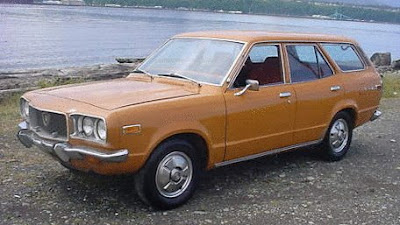

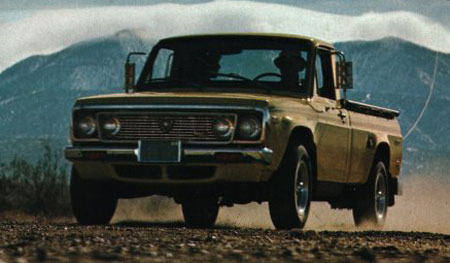
Mazda had totally committed themselves to the Wankel engine, so they couldn’t simply euthanize the venture and revert to conventional engines; they had to find a “home” for the rotary. They needed ideas, and in the years between the engine’s initial fall from grace and the runaway success of the first-generation RX-7 in ’79, where Mazda finally hit on the formula that would make the Wankel financially viable, they tried a few different things.

One experiment that sadly never took off is the coupe featured in this post, the Mazda Cosmo, or RX-5 in international markets. The idea was to harness the incredible popularity in the ’70s of the “personal coupe” concept—think Cadillac Eldorado, Ford Thunderbird or Olds Toronado, among a myriad of others. So rather than give the rotary engine a completely distinctive wrapper to reflect the unconventional engine, they decided to “American-ize” the concept and ape current market trends, albeit on a smaller scale (the Cosmo tipped the scales at a welterweight 2,500 lbs).

Unfortunately, it didn’t catch on. Mazda dropped the car after the ’78 model year, when it was clear Americans just weren’t buying the recipe, apparently preferring their giant domestic land yachts or dedicated sports cars like the 280ZX to a nicely-styled but smaller personal coupe with a smooth, flexible engine and crisp handling.
I love the Cosmo. It’s incredibly obscure, which is always appealing; I love having the “What is that?” conversation in parking lots and at gas stations. Besides, as much as Mazda tried to emulate the larger American cruisers of the time, what they actually hit upon has a sort of pony car swoop and dynamic to its profile. And details like the side windows, grille and taillights, while still exhibiting some of the fussiness Japanese designs have always been notorious for, are remarkably clean, especially considering the era in which it was produced. Best of all, if you know anything about the family of Mazda rotary engines, you’ll be aware of the fact that it’s a very modular powerplant, and with a little mixing and matching of components produced over the years, it would be relatively simple to assemble a much more powerful rotary to drop right into the Cosmo chassis. So it’s eminently upgradeable. As unloved as it was in its day, to me here and now, those qualities add up to a winner.
Editor’s note: It’s understood there were two Mazda cars that shared the name “Cosmo:” The pioneering 110S and later line of personal coupes that complimented the automaker’s RX-7 sports car line and concluded with the stunning JC Cosmo of the early ’90s.