Spannerhead Dot ComSpannerhead.com

Posts filed under ‘News’

The Routine Meets the New: The 2011 Indian GP

October 30, 2011 by Matt

2011 Indian India Grand Prix Formula 1 One Track Circuit Map Buddh

Guess who won the inaugural 2011 Indian Grand Prix, contested at the brand new Buddh Circuit (shown above) near New Delhi? If your guess has a German passport and a last name starting with the 22nd letter of the alphabet, you’re right on the money.

As usual, it wasn’t even a contest, as Sebastian Vettel led from pole to checkered flag, piling on one fastest lap after another. Farther back in the field, though, there was some excitement between Felipe Massa’s Ferrari and Lewis Hamilton’s McLaren, as they duked it out for fifth place. And as had already happened four times this season, there was contact between the two cars as Hamilton tried to squeeze through. Neither car was irreparably damaged, but the McLaren driver eventually had the last laugh as Massa retired a few laps later with suspension failure. Slumming 7-time world champion Michael Schumacher had a noteworthy drive in his Mercedes, starting from 11th on the grid and finishing fifth. And I was pleased to see Fernando Alonso’s Ferrari hold off Mark Webber’s Red Bull for a podium finish in third place.

As for the venue, I thought it looked like an exceptionally rewarding circuit to drive, with many elevation changes, some nicely strung-together esses in the backfield and a couple of flat-out straights. It was fun to watch the F1 cars dance from one apex to the next, up and over the crests and dips. The organic, almost “natural” quality of Buddh presented a remarkable contrast with the sterile, quasi-clinical atmosphere at Singapore a month or so ago. From what I’ve seen, when it comes to the new crop of venues dotting the formerly F1-deprived expanse between Europe and the far east, I’ll take the new Indian GP hands-down.

No Comments on The Routine Meets the New: The 2011 Indian GP

Whoops! New Toyota RWD Coupe Leaked

October 28, 2011 by Matt

Toyota FT-86 FT86 Scion FRS FR-S Coupe RWD

Add this to the Apple iPhone-style “probably intentional leak” file. In other words, in this day and age, what with all the buzz-building that takes place online, and given the FT-86’s target market is almost entirely comprised of tech-savvy 20-somethings, I’d wager not many folks believe Toyota really minds the extra publicity afforded by the “accidental” pre-release leak of the upcoming car’s showroom brochure.

Toyota FT-86 FT86 Scion FRS FR-S Coupe RWD

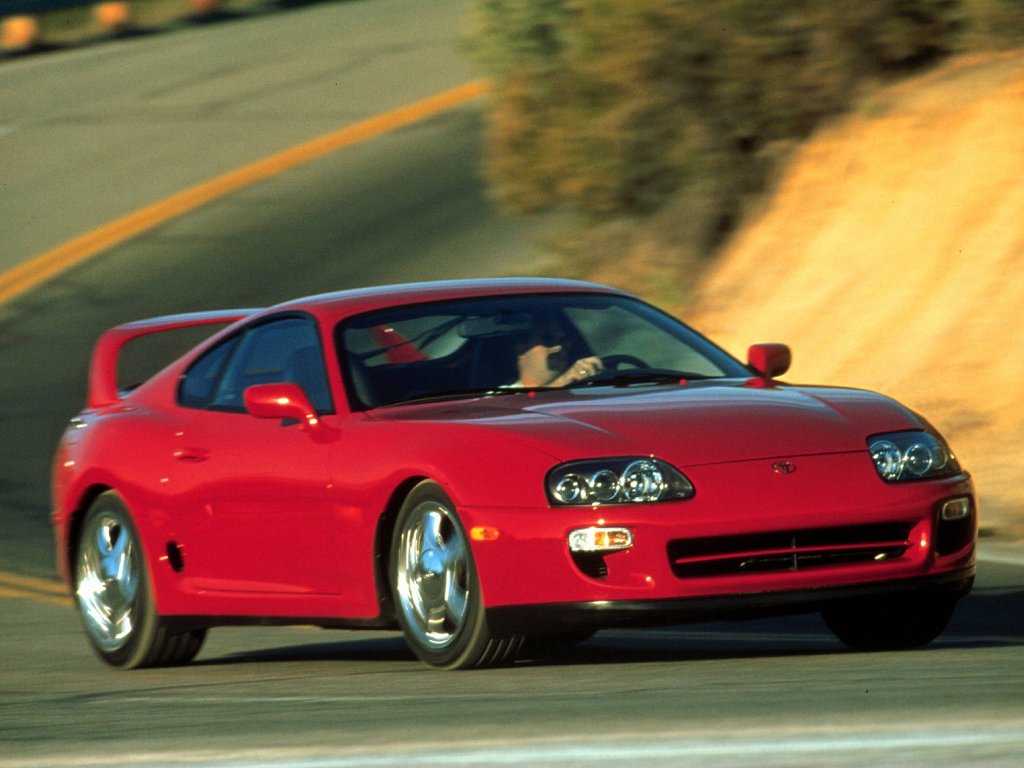
In any event, it’s neat to be able to size up the first true sports car offering from Toyota in quite a while, and this from a company that in the early ’90s had three sports car offerings in production simultaneously: the range-topping Supra, sidekick Celica and mid-engined MR-2.

The “FT-86” moniker (it will be marketed as the Scion FR-S in the States) of the new car is a giveaway that it’s meant to reach back a bit farther than the aforementioned sporty offerings and tap into the cult following achieved by the late, great ’83-’87 “Hachi-Roku” AE86 Corolla of Initial D fame.

As for the design itself, it’s appropriately well-tailored and refreshingly free of the unsettling awkwardness than characterizes what’s likely to be its main rival, Hyundai’s Genesis Coupe. The size and shape of vents in the fascia is definitely reminiscent of the legendary ’93-’98 Mark 4 Supra. Overall, the car exudes a crisp confidence, and will likely be just the starting point for the cottage industry of bodywork and engine tuners that will undoubtedly rally around it. They’ve been waiting for a worthy, all-new Japanese RWD coupe for a long, long time.

4 Comments on Whoops! New Toyota RWD Coupe Leaked

Mercedes Gets Its Pistons Back in a Row

October 27, 2011 by Matt

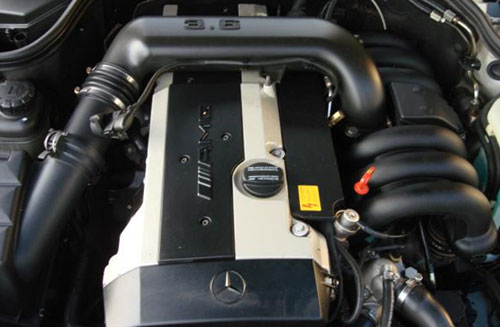
Mercedes Benz Merc M-B C36 AMG Engine Bay

Even as BMW tiptoes in the direction of abandoning their relationship with the straight-6 cylinder configuration, their arch-rivals at Mercedes-Benz seem set to reintroduce an engine featuring 6 cylinders all lined up, a layout they haven’t used for gasoline engines since they went all-V6 in ’99.

It’s yet another engine configuration shakeup as engineers scramble to find the new balance between their brand’s requirements and new efficiency and emissions regulations. The past half-decade has witnessed a remarkable downsizing of displacement and a virtual explosion of turbochargers, which have the promise of boosting the power of the smaller, more miserly engines. Whether or not they’re equipped with a turbo, the new inline-sixes from Mercedes stand a good chance of replacing larger engines at the same time they increase efficiency over the automaker’s outgoing V6s, mainly due to better manifold optimization and lower valvetrain loss (two camshafts vs four, etc). The only question I have concerns what I understand to be another major reason automakers are switching to smaller, shorter engines: The new EU frontal impact crash regulations. How will Mercedes square the additional length of an inline-6 over a V6 with the added crumple zone size required by the regulations?

If nothing else, it’s an interesting turn of events, and ensures that whatever BMW decides to do, the inline-6 won’t go be consigned to the dustbin of obsolete engine configurations (see: straight-8) just yet.

No Comments on Mercedes Gets Its Pistons Back in a Row

A New BMW M1 In the Works?

October 24, 2011 by Matt

1980 BMW M1 M-1 White

Left Lane reports today BMW’s performance M division is lobbying its parent company for the green light to develop a bespoke sports car:

According to the head of product development for the M division at BMW, Albert Biermann, speaking with Inside Line, his team is itching to have a crack at building a unique model from the ground up, totally unique from anything in the BMW lineup.

This of course would follow the same suit as the SLS, turned out by AMG, which one can only assume is the fueling factor for why the M folks would like a shot at a one-off car themselves. The only thing holding the project back? Money of course, “We’ve discussed it several times but we’ve never been able to make the business case. Everything we do has to make money.”

Aside from the unfocused and short-lived ’99-’03 Z8, among German automakers, Porsche, Mercedes and Audi have had the high-end halo car performance segment all to themselves for the last 30 years. It’s an open question why BMW hasn’t made a foray into that segment since the classic ’78-’81 M1, especially since they haven’t shied away from other niches like SUVs (X3, X5) and crossovers (X6, 5-series GT). What’s been holding them back? Does BMW feel their existing model lineup projects enough of a performance image to render a flagship model superfluous? Or were they so badly burned by the M1 experience—in spite of the fact that the actual car was quite good—that they swore off the supercar segment indefinitely?

BMW M1 Homage Hommage Concept Show Car Orange Red

In any case, I can’t think of downside to BMW turning their in-house tuning shop loose to build the supercar of their dreams—unless it ends up looking like the hokey ’08 M1 Homage concept car pictured above. There’s nothing original or attractive about the M1 Homage; it simply takes all the styling cues of the classic car and exaggerates them into oblivion, like a caricature drawing. Part of what made the M1 such a stunner—in spite of the somewhat awkward side proportions necessitated by the long mid-mounted straight-6 engine—was its Germanic restraint, especially in the era when Ferrari and Lamborghini were actively trying to one-up each other in the flamboyance of their supercars’ styling. The original M1 stood apart, not only for its tailored good looks, but also for its ease of use, a quality which prompted James May to call it “the first truly user-friendly supercar.” BMW M is late to the game, and the upper-crust performance car niche is more saturated now than it was then, but if they can distinguish themselves with restraint and understatement design-wise and focus on polishing the dynamics to a high degree, a new M1 has the potential to elevate the brand significantly.

No Comments on A New BMW M1 In the Works?

Weighing In On Chevy History

October 22, 2011 by Matt

2011 Chevy Volt 1963 Corvette C3 Stingray Split Window 69 1969 Camaro Chevrolet

Commemorating Chevrolet’s upcoming 100th anniversary as a company on November 3rd, the New York Times asked a number of automotive luminaries to name their favorite Chevys.

Talk show host and car fanatic Jay Leno, NASCAR drivers Dale Earnhardt Jr. and Jimmie Johnson, racing legend Mario Andretti and famous auto exec Bob Lutz opined and shared anecdotes concerning their selections. Their picks weren’t shocking per se, but the fact that both Leno and Lutz listed the Volt is at least somewhat eyebrow-raising. The C6 Corvette ZR1 is the deserved “winner,” named three times by the participants. No argument here—it’s a world-beater, even if Top Gear do continue to ridicule its build quality.

It’s no secret I’m not a huge fan of the Bowtie, but I certainly agree they have had their share of charismatic cars. Chevy’s relationship with their parent company GM, and by extension all their sister marques like Pontiac and Buick, is so symbiotic that I found myself instinctively listing GM cars instead of specifically Chevys as I mulled over what I would name as my favorites. Overall, I think the “consultants” in the NYT article covered the bases, although I have to say I’m a bit surprised such icons as the ’69 Camaro or ’63 Split-Window ‘Vette aren’t included (although Johnson did list the ’63-’67 C2 Corvette generation as a whole).

What about you? What sits atop your “favorite Chevys” podium?

No Comments on Weighing In On Chevy History

Bionic Future: The Audi e-tron Spyder

October 19, 2011 by Matt

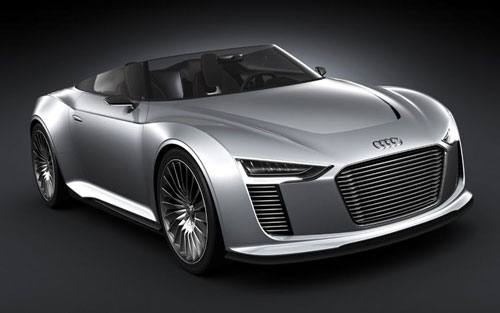
2010 Audi e-tron etron Spyder Convertible Cabrio

Audi has been allowing limited road testing of their e-tron Spyder diesel-electric hybrid concept car. Arguably a more successful design than that of the coupe version, the car represents a statement by the German automaker about its future both design- and engineering-wise.

Motivated by the combined efforts of a mid-mounted 296 hp twin-turbo diesel V6 driving the rear wheels and a pair of 43 hp electric motors powering the fronts, the e-tron Spyder will scoot from 0-60 mph in a claimed 4.3 seconds. Design-wise, the car seems to take the “Tron” part of “e-tron” name quite literally in its retro-futurism. Perhaps more than any other concept car, the e-tron embodies what we thought “cars of the future” would look like from the vantage point of the mid-’80s. It’s a compelling amalgam of the retro and forward-looking, blended so completely that specific cues that connect with either theme are difficult to pick out. The overall effect, though, resonates emotionally by tapping into a kind of nostalgia at the same time it points the way forward. Put another way, the e-tron Spyder at once looks like concept cars we’ve seen before as well as cars we’ll see in the future. It’s a fascinating effect.

In addition to giving automotive journalists restricted wheel time, Audi provides a video of the car in action. It’s well-made, and worth viewing.

Click on the jump to watch.

No Comments on Bionic Future: The Audi e-tron Spyder

The BMW F30: A Design Analysis

October 17, 2011 by Matt

2012 BMW 3-Series 335i 328i F30

Arguably the biggest car news of the year, BMW last Friday unveiled their 6th-generation 3-series, the 2012 F30. Every previous generation has represented the template, the high-water mark for sports sedans during its reign, so expectations are somewhat lofty for the new arrival.

With the F30, there are dozens of new features and attributes to consider; tonight, though, let’s ignore the mechanical and electronic and focus on curb appeal, or the styling of the new bread-and-butter BMW.

The nose. Probably the most-discussed aspect of the new car’s design are the unprecedented “tear ducts” connecting the headlights with the trademark “kidney” grilles. This element seems to serve two purposes: It draws its inspiration from recent BMW concept cars like their i8 EV, so is forward-looking in that respect, and it also hints at more classic BMW fascia styling, e.g. the ’80s E30, whose kidneys and headlights were embedded in a large rectangular grille. More questionably, it seems to inject a dose of “squinting” anthropomorphism into what was one of the most refreshingly non-human automotive visages in the business. At least the car doesn’t look happy. Goodness knows how that would have gone down.

2012 BMW 3-Series 335i 328i F30

The rear. Easily the most conservative angle of the car. An amalgam of the previous generation’s refreshed rump and BMW’s new F10 5-series, there’s absolutely nothing groundbreaking about the taillight area. We get a slightly higher trunk line than on the outgoing model, putting a bit more wedge into the profile, and the lights are arranged in BMW’s classic L-shape, nicely framing the car’s athletic tush. Considering recent BMW trunk disasters like the E63 and E65 “Bangle-butts” and the pre-refresh E90’s “clenched” rear end, I think we should all breathe a sigh of relief over the F30’s treatment.

2012 BMW 3-Series 335i 328i F30

The proportions and other details. My favorite styling attribute to discuss, and an area where BMW has traditionally excelled, the proportions are the car’s most successful design quality. In profile, where the distribution of visual masses is most easily distinguished, there are a couple of noteworthy changes from the previous-generation 3-series. First, the front overhang is more pronounced. The preceding three iterations of BMW’s 3-series—the E36, E46 and E90—featured front wheels that were pushed as far forward as possible, the front overhang becoming little more than a glorified fender holding the lights and grille. This benefited agility by lowering the polar moment of inertia around the car’s center of gravity, but it made for somewhat awkward wheel arch placement in profile. With the F30, the relationship between various areas of sheetmetal on the side of the car is normalized, creating a very harmonious effect.

The second significant deviation from its predecessor’s design resides in the angle of the nose. Pleasingly, it’s more upright, following its bigger brother the F13 6-series by moving in the direction of another classic BMW styling trademark, the sharknose. It’s an aggressive, distinctive nose treatment that subtly highlights the car’s RWD bias by suggesting that the styling doesn’t have to be stretched tight over an engine hanging out in front of the axle line. It gives the overall aspect of the profile a ready, forward lean—the car is set to lunge ahead, to attack the turns. Well done indeed.

2012 BMW 3-Series 335i 328i F30 M-Sport Interior

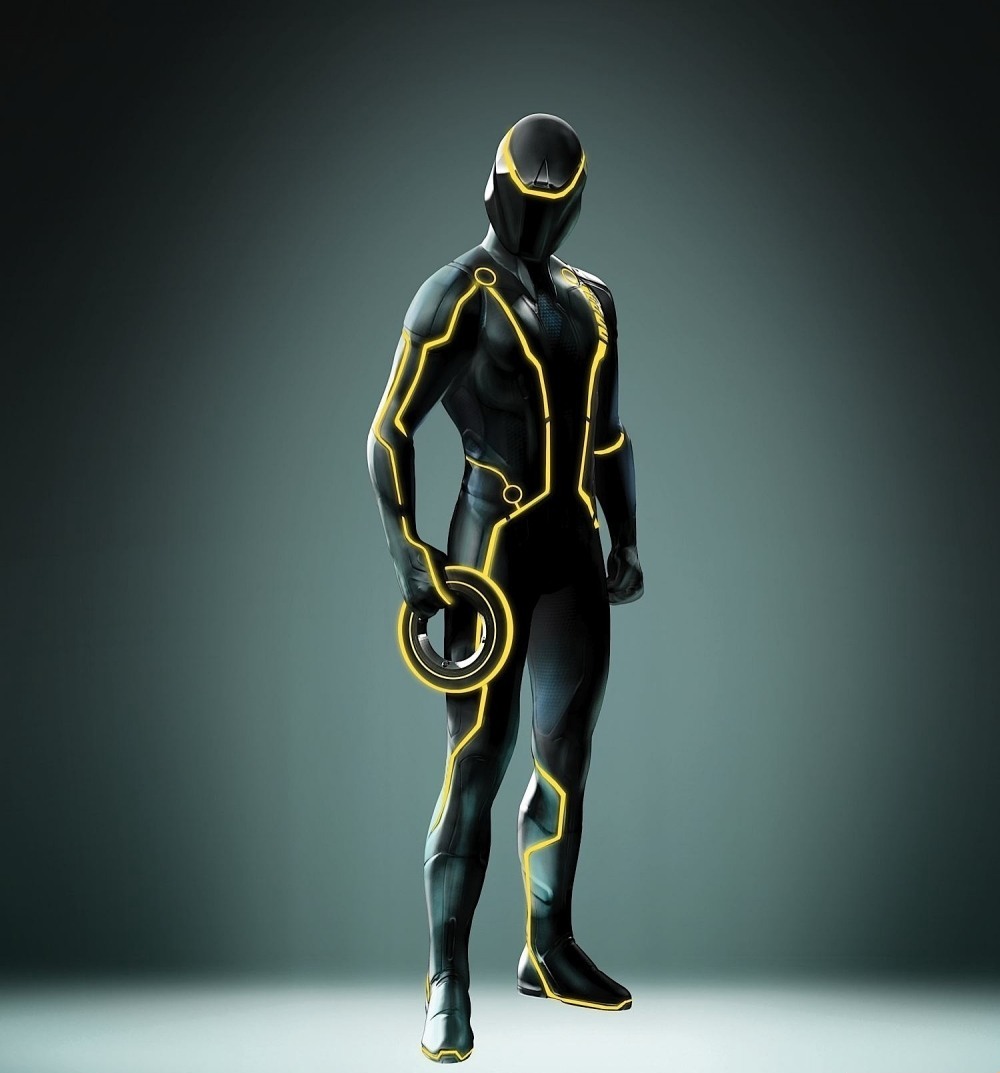
The interior. As with the rear end, the interior is nothing more than an evolutionary update of the previous generation’s. The trademark driver-angled, wide center console is present, as are the quad of analog gauges in the cluster. As conservative as it all is, the steering wheel of the M-Sport trim package (shown above) deserves special mention for looking especially bionic, attractive and, well, grasp-able. I feel like I need to sheath my hands in some sort of Tron-like exoskeletal gloves before I wrap my fingers around it. Very cool.

From a design standpoint, then, BMW did exactly what they needed to do to move the car forward, and nothing they didn’t. The F30 is a remarkably well-executed effort. Styling-wise, the BMW 3-series is dead, long live the BMW 3-series.

1 Comment on The BMW F30: A Design Analysis

The Year of the Bull

October 16, 2011 by Matt

2011 Formula 1 One Red Bull RB7 Car

Red Bull F1 laid claim to the 2011 F1 Constructor’s title today with a routine Sebastian Vettel win at the Korean Grand Prix.

Same story, different track. Vettel actually started from second, but took the lead from a pole-sitting Lewis Hamilton in his McLaren on the first lap and never relinquished it, increasing his distance from the rest of the field for the remainder of the race. Mark Webber, in the second Red Bull car, desperately wanted to make it a one-two finish for the constructor as they clinched the championship, but his driving skills aren’t the match of his teammate’s, and Webber couldn’t get past a recently-resurgent Hamilton.

There few relatively few retirements throughout the day, the most noteworthy being when Michael Schumacher’s Mercedes was broadsided by Vitaly Petrov’s Renault, giving the 7-time world champion another inglorious race result.

With three races left in the already-decided season, we’ll see if Vettel will relent and make the remaining races anything but a battle for second, or if he’ll maintain his, and his team’s, crushing dominance in 2011.

No Comments on The Year of the Bull

A Car of Depressing Complexity

October 11, 2011 by Matt

BMW F30 3-Series Concept Sketch

In anticipation of the Friday reveal of the upcoming BMW F30 3-series, the Bavarian automaker released a series of videos commemorating the history of the 3-series.

I suspect BMW’s intent is to remind the automotive world of the new car’s rich lineage and reinforce the 3-series’ status as the archetypical sports sedan. For many enthusiasts, though, the series of videos may backfire, reminding them instead of additional bloat and complexity of each succeeding generation. And as promising as the F30 looks visually—essentially a 75% version of the very attractive, recently-released F10 5-series—the signs don’t point to a letup in the rate of feature addition or overall convolution. The new 3-series looks like it will be at least as electronically-enveloped as its larger brother the F10, and that’s saying a lot.

The larger question here is: Why does BMW do it? Why does a car company ostensibly focused on the quality of the driving experience, the elemental connection of the driver with the road, insist on cramming so much technology into their cars? It’s not the first time the criticism has been leveled at the automaker, either—the electronic layering of the ’02 E63 7-series and ’04 E60 5-series, just to cite two of several examples, was very poorly received, even if the fundamentals of the cars’ chassis and engines were very well done. Granted, BMW isn’t the only manufacturer to stuff its cars to the gills with the latest doodads and geegaws. But they do tend to receive a proportionally larger amount of criticism for it compared to say, Mercedes or Lexus. So why does BMW feel the heat? Or is that my own skewed perception, being a part of the BMW-specific community as an owner and enthusiast? Your thoughts?

No Comments on A Car of Depressing Complexity