Let me just say this up front: The new Jaguar C-X16 concept is jaw-droppingly gorgeous. The proportions are beautiful, the details are well done, and the whole car is a magnificently tasteful expression of everything we love in a classic British GT—even if the name does succumb to a touch of McLaren-like weirdness.
Let’s get this out of the way, too: The powertrain—incidental as it is to a car whose appeal is 95% predicated on its looks—is a new type of hybrid system. When a The Fast and the Furious-style steering wheel button is pressed, the supercharged, 376 hp 3.0l V6 is augmented by the extra 92 hp of an electric motor grafted onto the gearbox. Cute. But only marginally relevant.
Now, to the issue at hand. When I first laid eyes on the concept last night, my gut reaction was “BUILD IT!” Since, however, I’ve come to appreciate Autoblog‘s critique:
[I]t’s as good as anything from Ian Callum, Jag’s Director of Design, but we’d be remiss not to say that it looks a little dated. Gorgeous, no doubt, but in the same way the XK is a stunner, but fails to quicken our pulse when we see one on the road.
Therein lies the rub, and Jaguar’s quandary as originators and Lord Protectors of the classic British GT faith: How to keep pace with evolving styling trends, offer something fresh-looking and maintain a connection to a uniquely rich heritage—a heritage distinctly dependent on looks rooted in classic proportions, stance and tastefulness.

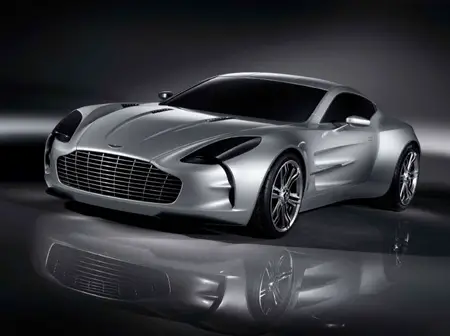
Sadly, the C-X16 isn’t the solution. I honestly expected more from Callum, the force behind Jaguar’s wildly successful stylistic reinvention. With the latest XJ and XF, he accomplished the herculean task of prying the automaker away from 40-year-old design cues. But with the C-X16, in spite of the updated grille shape and other details, he falls back into old habits. The man who penned such classics as the brand-reviving Aston Martin DB7 and even the latest GT from Jaguar (the XK) doesn’t seem to have a vision for the body style’s aesthetic future as he serves up a collage of other cars’ design elements, from the Aston One-77‘s finned fascia and hips to the BMW Z4 M Coupe‘s greenhouse and rear deck treatment.
Concept cars offer a vision of a brand’s stylistic future, and range-topping GTs like Jaguar’s XK set the aesthetic tone for the rest of the brand. The automaker had the chance to unveil something really daring (like their showstopping XK120 and E-Type of the late ’40s and early ’60s, respectively), but as seductive as the C-X16 is, it’s a missed opportunity.