Spannerhead Dot ComSpannerhead.com

Posts filed under ‘News’

The Return of Bland

August 24, 2011 by Matt

2012 Toyota Camry Rear

The 9th generation Toyota Camry rolls into showrooms this fall to…very little fanfare, relatively-speaking. Nevermind that it’s the bread-and-butter model for the world’s biggest carmaker in their biggest market. Most enthusiasts will respond with a ho-hum and flip to the five-way supercar comparo on the next page.

So why should we care? Simple: We’ll be surrounded by them on the commute home, and those of us who value eye-pleasing design would like to have something nice to look at through the windshield and in the rear view mirror. With that in mind, I’d like to draw attention to a fairly significant change with the new Camry: The taillight area.

2009 Toyota Camry Rear

Contrast the rear of the new Camry (shown at top) with that of the previous generation (shown above). The profoundly awkward contrasting angle between the bottom of the taillights and top of the bumper lip has been excised, the taillights’ “puffiness” is gone and the transition between the top of the rear fenders and the trunklid has been smoothed out. Small matters to most, but as a designer, those little details just made me…uneasy every time I’d see one at the supermarket parking lot, and I’m relieved they’ve resolved the issues. Even if the remainder of the styling is completely anodyne.

No Comments on The Return of Bland

The Unbroken Chain: Porsche’s New 991

August 23, 2011 by Matt

Porsche 991 911

And…here we go again.

Porsche released photos today of the latest reworking of their evergreen and iconic 911 sports car, the 991, in anticipation of the upcoming Frankfurt Motor Show.

If the profile photos do illustrate the car’s proportions accurately and aren’t squashed through some Photoshop trickery, the newfound long-and-low-ness looks properly fantastic, although some of the classic 911 silhouette has been lost with the added windshield rake. The generously-sized, engine-housing rump and upright, round headlights are still alive and well, however, so there’s still no mistaking it for anything else.

The base 3.4l flat six has been bumped to 345 hp, channeling power through a new 7-speed manual transmission, a gearbox whose shift gate pattern enthusiasts the world over can’t wait to scope out.

Porsche 993 911 Turbo 993TT

As nice as the new 991 sounds, my pick of 911s would still be the conveyance for the last of the air-cooled flat sixes: the ’93-’98 993 (Turbo shown above). Those hips, those bumps and curves… Who cares if it didn’t look quite as sleek as its rivals; something about the gestalt of the car, the convergence of shapes is seductive like nothing else. Especially in contrast to the later, bathtub-ish, plasticky 996, the 993 represents the last stand of the unaltered 911 greenhouse, with its upright windshield and closely-spaced wipers, and it retains the classic mechanical thrum of the air-cooled mill. Out of the continuous 48 years of production of the 911, the 6 years of the 993 stand out.

No Comments on The Unbroken Chain: Porsche’s New 991

Taking the Measure of the RX-8

August 18, 2011 by Matt

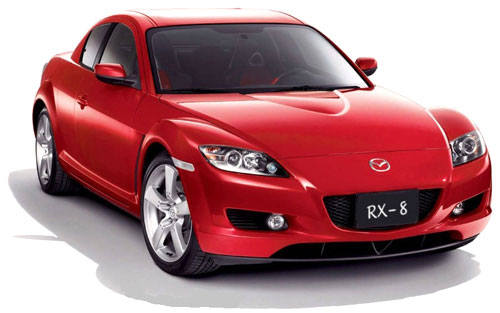
Mazda RX-8

As production of Mazda’s aging RX-8 sports coupe winds down and with it, production of the automaker’s signature rotary engine, I think it’s worthwhile to pause and scrutinize the car’s 8-year model run.

Introduced in 2004 in the US, the RX-8 represented the long-awaited reintroduction of the rotary engine to our market after the too-hasty departure of the 3rd generation RX-7 in 1995. Rumors had been swirling for years about which form the return would take, and after a series of teaser concept cars like the RX-01 and RX-EVOLV, it’s fair to say no one really knew how Mazda would package the engine, if indeed it did return. Would it be a fire-breathing road-eater like the 3rd-gen RX-7? A cheap and tossable sports car like like the 1st-gen? Or something completely different? More than anything, speaking as a Mazda fan and rotary buff, we just hoped Mazda wouldn’t compromise in the fun-to-drive department.

Mazda RX-8

We got something of a mixed bag. Jeremy Clarkson remarked in his review that the car looked like it had been “styled by suggestion box,” and that statement could have held true for the engineering as well. To summarize the pros and cons of the then-new RX-8, the good points:

  • Low weight. Mazda admirably kept the car around 3000 lbs for the entirety of its model run.
  • Excellent handling. Review after review praised the responsiveness of the chassis, and in their recent comparo, Car and Driver ranked the 7-year-old RX-8 an astonishing third, beating out even the M3.
  • Some measure of practicality. Stung by criticism of the late 3rd-gen RX-7’s single-minded focus on performance at the expense of everyday livability, Mazda added a pair of so-called “freestyle doors” to enhance rear seat access. They might well have been added to assuage the bean-counters’ fears, but they’re undeniably practical.

And the negatives:

  • Uneven styling. Compared to its arch-rival Nissan 350Z, released shortly before the RX-8, the Mazda’s design is much less coherent. The concession to a more practical roof line is partly to blame (the 350Z is a pure 2-seater), but no one can claim the added rear seat volume is responsible for the mess of lines called the nose. The smiley face grille (exacerbated with the styling refresh in ’09, shown below) and headlights are cartoonish when they should be sleek and serious, and the profile is bulbous instead of tapered and focused. And the clear taillights and other details represent, yet again, the worst tendency of Japanese designers to chintz up the outside of their cars.
  • Low power. I won’t take Mazda to task for the inherent high-revving nature of the rotary engine. The power’s at the top of the rev range, and you have to spin it—there’s no getting around that (good thing the engine makes the task so effortless). That said, what power was available wasn’t competitive in its class, and Mazda committed the cardinal sin of over-promising and under-delivering just as the car was released: They quoted a power figure of 250 hp; reality was closer to 232, and after independent dyno tests called Mazda’s bluff, they embarrassingly re-rated the car and offered to buy back those of any who were dissatisfied. At least they did damage control, but it happened at the worst possible time and to the ambassador of Mazda’s key technology. Stupid, dumb, unfortunate.

Mazda RX-8

Overall, I was a huge fan of the car’s dynamics, could have lived with the power (I don’t mind winding out my cars’ engines), but had real issues with the styling, especially the ’09 refresh. I don’t think the car hurt Mazda’s or the rotary’s image—public perception is still that it’s a gas-guzzling, oil-burning hamster wheel—but the RX-8 didn’t help matters either. Basically, it dutifully carried the “halo car” torch for Mazda for 8 long years, but didn’t broadcast itself to a wider audience in any capacity other than pleasant placeholder.

Does this mean I wish Mazda had “mainstreamed” the rotary, incorporating it into a more mass-market sedan or GT bodystyle, like the automaker did in the early ’70s? Not necessarily, but the RX-8 at least could certainly have benefited from a larger dose of conviction—the amalgam of roles and compromises bundled into the car spoke of an automaker that may have soldiered on with their signature technology as a matter of duty, but not necessarily as a matter of pride. As good as it was in many ways, the RX-8 simply wasn’t focused or stunning enough. Here’s hoping that whatever form the the next wrapper for the rotary takes, it at least has a strong identity—buyers can relate to that, and respond to it; witness what Mazda itself accomplished with the Miata. As for me, I’ll be eager to see what they come up with next.

No Comments on Taking the Measure of the RX-8

A Styling Non Sequitur

August 16, 2011 by Matt

BMW 328 Homage

I don’t get this one.

I want to give the designers the benefit of the doubt, but it just doesn’t pass the “obvious test;” in other words, when all’s said and done, what does the object in question most obviously resemble? And the answer in the 328 Homage’s case: An angry beaver. Once that comparison is stuck in your mind, there’s no getting around it.

The larger question is, how exactly is it an homage? Here’s the original ’36-’40 car, for reference:

Original BMW 328

So there’s a superficial resemblance in some of the details, like the wheels, hood straps, split windshield and long-nose / short-deck proportions. But otherwise… There’s little, if anything, in the homage that unambiguously recalls the original. I don’t think the homage needs to slavishly ape the original, either, but there’s a way to honor a legend stylistically without having to resort to campy details and the beat-me-over-the-head-with-it title of “BMW 328 Homage.” If I can’t draw the connections myself and be impressed with the coherence of the effort, the designers haven’t done their job. And with the Homage, they most certainly phoned it in. Thumbs down.

1 Comment on A Styling Non Sequitur

Electric Decisions

August 13, 2011 by Matt

Tesla Model S

New pictures surfaced today showing the upcoming Tesla Model S sedan side by side with the headline-grabbing EV automaker’s much-hyped Roadster.

At this point, I’m not sure whether the attempt to completely rip off the styling of the Maserati Quattroporte and especially the Aston Martin Rapide is an utterly shameless lack of design originality, or a masterful recognition of the qualities that give those two cars instant pull in the stratospheric price points they inhabit ($125K and $200K, respectively).

That said, if Tesla manages to talk potential owners through uneasiness over the car’s electric range, and they can get their logistical ducks in a row (production capacity, dealer network, advertising, etc), the car has the potential to be a game-changer at its target MSRP of just over $55K. I mean, who wouldn’t want a car as sexy as the $20K more expensive Audi A7, with the added trendiness of being an EV, at a “paltry” 15 grand (pre-incentives) over the exponentially frumpier Chevy Volt? I’ll speak for myself, but between those two, it’d be a no-brainer to hunker down and save the extra cash (or cough up the extra monthly premium) to drive the Tesla over the Chevy.

1 Comment on Electric Decisions

More E-Cars From Munich

August 9, 2011 by Matt

2011 BMW i8 Concept Front View

At least, so far, it’s a sub-brand.

That is, the BMW formula enthusiasts know and love hasn’t been completely revamped by integrating alternative propulsion seamlessly into the automaker’s lineup.

Following the recent unveiling of the BMW i3 Concept all-electric city car and the i8 Concept hybrid performance coupe (pictured at top), Left Lane News reports a model range-filling i4 and i5 may be in the works (emphasis added):

The i4 is said to be largely based on the i3, but will take the form of a mini sports car. It remains to be seen if the car will arrive as a coupe or roadster, but the two-seater is intended to act as an entry-level model for those that can’t afford the up-market i8. The i4 could borrow the electric drivetrain from the i3, but a version of the i8’s diesel-hybrid system isn’t completely off the table.

The i5 is rumored to be a mid-size sedan model with coupe-like design features. The i5 will reportedly borrow the i8’s drivetrain, which should translate into some decent performance figures. It remains to be seen how BMW plans to market the i5 – given it will be about the same size as the 3-Series – but the German automaker has plenty of time to iron out all the kinks – if given the green light, the i5 and i4 aren’t expected to launch until the end of the decade.

It’s no secret I don’t think terribly much of BMW’s latest foray into eco-correctness, but I should clarify the grounds on which I take exception to their direction: Branding. As with the FWD issue, I’ve no problem whatsoever with BMW making the best hybrid or pure electric cars in the world—just don’t stick a BMW roundel on the hood. Call me territorial, call me inflexible; there are some equations in this world that deserve to be left alone—they’ve earned the right to be. Fortunately, in this case, it seems BMW is at least attempting to distance the sub-brand somewhat from the “conventional” model range. I just wish they’d go farther and cloister the new cars altogether into a completely separate brand. But that’s obviously not going to happen.

2 Comments on More E-Cars From Munich

As the Eccentric Shaft Turns

August 6, 2011 by Matt

Mazda 12A Turbo Engine Wankel Rotary

Well, that answers that.

Autoblog reports the Mazda rotary hasn’t been shelved, like I had feared, although it seems to be in a sort of cryogenic suspended animation:

Mazda execs have apparently confirmed that engineers are working on a more efficient and more powerful version of the Wankel. While the project was technically back-burnered during the economic downturn, the research wasn’t canned outright.

The “more efficient and powerful version of the Wankel” is presumably the 16X, the long-awaited longer “stroke” (read: torquier) successor to the prolific 13B, a variant of which has been installed in every top-of-the-line Mazda sports car since 1986.

Unfortunately, the report goes on to point out:

A rotary does pair well with an extended-range electric vehicle platform, however, as the high-revving nature is perfect for turning a generator. While that may be a far cry from the low-slung RX-8, it’s at least reassuring to know that the engine design could have a future.

Again, yes and no. While it would be gratifying on some level to know that Felix Wankel’s internal-combustion epiphany wouldn’t be utterly tossed into the dustbin of history, being relegated to some sort of “prop” for an up-and-coming alternative propulsion technology just seems, well…demeaning to an engine configuration with so much character and untapped potential—in standalone, gasoline-burning form.

In my perfect world, Mazda would build a new front-engine, rear-wheel-drive sports car and a high-end sports sedan around the 16X, their development of the rotary having cracked its fuel consumption and low-end torque issues. The automotive press would hoist the new pair of models on their collective shoulders, rhapsodizing that Mazda had finally found the perfect engine to complement their peerless chassis tuning, and buyers would flock to Mazda showrooms in droves. The unexpected success would at last convince other manufacturers to give the Wankel a fresh look, and Mazda would license the technology to another automaker or two. The engine wouldn’t take over the world, so to speak, but would perform a sort of Apple-in-the-late-’90s-style comeback, slowing gaining legitimacy and a sort of non-conformist cool (more than it already has, that is) on the way to establishing a secure beachhead in the market.

To put it mildly, that’s a bit much to extrapolate from this latest confirmation that the rotary is not, in fact, dead. But I have a feeling my pipe dream is shared by more than a few rotary enthusiasts out there.

3 Comments on As the Eccentric Shaft Turns

Crusading for Stickshifts

August 4, 2011 by Matt

BMW Polished Manual Shifter

Left Lane News reports MINI is following Car and Driver’s lead in launching a campaign to invigorate sales of manual-transmission-equipped cars in the US:

MINI … is trying to reverse the trend of left-foot lethargy with a $500 price decrease for manual-transmission-equipped models and a new advertising campaign entitled ‘Manualhood.’ The campaign, which touts the increased control of stickshifts, features a range of slogans including ‘get your shift together’ and ‘manual up, America.’

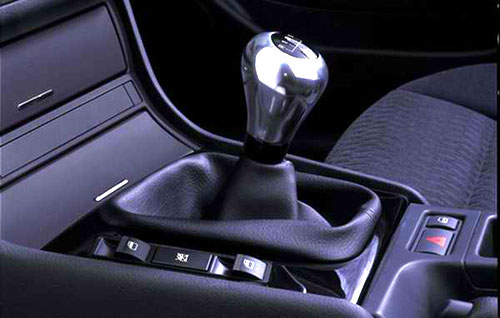
Forget politics for a minute—there’s a cause I get behind, and have; I’m a diehard stickshift proselytizer. To mash up the slogans of two manual transmission stalwarts (Porsche and BMW), there is no substitute for the joy of rowing one’s own gears. It’s involving, focuses the driver on his or her task and thus promotes alertness while driving, allows so much greater control over the car’s actions and it’s just a lot of fun to master the skill. Here’s hoping more American drivers see the light and decide to take up the challenge.

No Comments on Crusading for Stickshifts

Battery Drain

August 3, 2011 by Matt

2011 Chevy Volt

The latest report in a long string of stumbles out of the starting blocks, Chevy moved exactly 125 of their new Volts last month, far below expectations.

With most technological vanguards, an initially slow rate of adoption is somewhat to be expected, but given that the Volt was barely visible through the cloud of hype surrounding it for the past year and a half, the recent sales figures are stunningly low—if not entirely unsurprising.

Legions of automotive journalists have addressed the myriad of possible angles to the Volt narrative, so I won’t attempt to cover it in any sort of comprehensive sense. That said, I do want to emphasize one aspect of the story in particular: The connection between the overambitious yet half-baked nature of the car’s technology and the subsidies that underpinned its development.

The problem here, as with most government-funded endeavors, is that the absence of “skin in the game” in the form of the company’s own capital means risk assessment and market analysis is much less rigorous than it would be otherwise. When a company isn’t constrained by a sober appraisal of the position of the their product vis-a-vis market demand weighed against the capital they’re investing, they’ll almost always want to push the specifications of their product beyond what the market is prepared to accept. If it’s not your money, why not go nuts and make the most sophisticated car you can? Gotta give the taxpayers their money’s worth, right?

So, in contrast to other companies (Toyota, Honda, Ford, etc) who have been doing their due diligence, easing alternative propulsion technology into the marketplace progressively and deliberately—their own investments at stake—and achieving a fair amount of success (see: Prius, Civic and Escape Hybrids), GM, flush with capital they’re less accountable for, made the financially-dubious attempt with the Volt to pass their rivals in one fell swoop. It’s evident that a more conservative rolling-out of hybrid technology into their model line probably wouldn’t captivate the automotive press, but it might lay a foundation for more long-lasting success.

Government subsidies almost invariably produce solutions miscalibrated to market demands, whether below or above the parameters requested by would-be buyers. The Chevy Volt carries the unfortunate distinction of having its feet in both camps: Too “advanced” compared to other hybrids, which mesh better with existing infrastructure, and less car for the money than most consumers are looking for (seating capacity for only 4, range restrictions, very expensive even with “incentives,” etc). Those obvious reasons for its lack of popularity seem to escape GM, at least publicly, who prefer to harp on about “supply problems” and so forth. I don’t relish the premonition, but as with the EV1, I fully expect the Volt story to end in ignominy.

2 Comments on Battery Drain