Spannerhead Dot ComSpannerhead.com

Posts filed under ‘Tinkering’

Datsun 240Z Restoration:
First Triad Z Club Meet

February 21, 2012 by Matt

Triad Z Club Logo Datsun Nissan 240Z 260Z 280Z 280ZX 300ZX 350Z 370Z

Attended my first monthly meet of the Triad Z Club earlier this evening. Paid my annual dues, my laminated (!) membership card will soon be in my sweaty palms.

I had a great time. I printed out a big stack of pictures of my 240Z to discuss, and I think the guys appreciated having the visual reference. 7-8 guys showed, mostly older, and from what I could tell all with their heads on straight as far as restoring and modifying their Z-cars; in other words, no preoccupations with “stance,” sound systems or 19-inch wheels. They, like me, were refreshingly focused on retaining the classic look and feel of their cars even as they upgraded them, and that more for the simple enjoyment of driving rather than all-conquering speed. Their priorities tracked with mine.

Perhaps more than that, I was struck with how friendly everyone was. More often than not, when I go to a car meet I’ll be the only one talking, sharing stories, asking questions and so on; most of the guys who show seem to think standing mute posturing next to their “ride” amounts to participation, but the Triad Z guys were gregarious to a fault. I thoroughly enjoyed talking to everyone.

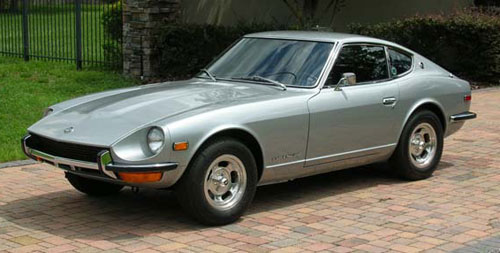
I didn’t think anyone would actually venture out in their Z, so I didn’t take my camera, but when I arrived, I kicked myself for not having brought it just in case. One of the members drove his restored ’74 260Z with tucked bumpers, in 901 Silver (same color mine will be) with BF Goodrich Radial T/As (same tires mine will have). It wore an air dam, headlight bucket covers and a fresh coat of foot-deep paint. It was beautiful. Interestingly, the car was running de-emission-ed Hitachi “flattop” carbs as fitted to the later 240Zs and early 260Zs, which most will dismiss as particularly poor carbs; however, the car ran perfectly fine with them.

I received a deluge of advice and contacts concerning all aspects of the upcoming restoration effort, which, along with the social aspect of the meet, was exactly what I wanted. I have a mind to invite some of the guys over when I try to start my Z for the first time; it would be great to have an experienced set of eyes and ears trained on the car during that effort. Great group.

Editor’s note: This post is Part 9 of an ongoing series chronicling my efforts toward the restoration of my 1972 Datsun 240Z, originally my father’s. Read the other installments here:

No Comments on Datsun 240Z Restoration:
First Triad Z Club Meet

Datsun 240Z Restoration: Wheel Work

February 2, 2012 by Matt

Datsun Nissan 240Z S30 Drum Brake Rear Suspension Hub Axle Shaft

Happy Groundhog Day! A few minor updates from the Z restoration front:

  • The Z’s right rear brake drum (pictured above) decided to seize up a few weeks ago. The wheel cylinder was evidently on its last legs, and after one too many applications of the parking brake, refused to unclamp the shoes from the inside of the brake drum. So, I can remove the drum from the hub (the typical challenge) just fine, but the shoes are still dug into the drum like a pair of rabid pit bulls. I’m going to try a few more tricks tonight. In related news, I hate drum brakes.
  • In the wake of my tactical adjustment detailed in the last post, I’m assembling a spreadsheet of parts I need in order to try to start the engine. I’ve been using this site as a part number reference, with the understanding that not everything I need has to be new from Nissan. In particular, wear items like brake pads and shoes and other bits like brake and clutch master cylinders can be remanufactured items. It’s been a challenge compiling part numbers and prices, but I’m slogging my way through it.

BF Goodrich Radial Comp T/A TA 14 225/60-14 wheels rims tires

  • The removal of the wheels for brake service presented me with the opportunity to take some measurements. I was pleasantly surprised to find they’re wider than I thought they were, at 14 by 7 inches. The stock tire size is 195/70-14, but on a 7-inch-wide wheel I could go all the way up to a 225/60-14 without trouble, which is a lot of rubber for a 2350 lb car. I have a soft spot for vintage muscle car tires with raised white lettering, so what I would like to do is acquire a set of BF Goodrich Radial T/As (shown above). They would complement the look and feel of the car perfectly. But…we’ll see whether those are in the cards.
  • ZTherapy received my carbs yesterday and, as expected, diagnosed the carb bodies as being too far gone to salvage. The company’s been under new management for the better part of 10 years now, after 5 or so with the original owner (who originally rebuilt my carbs), and has spent an inordinate amount of time repairing units damaged by the original owner’s remanufacturing process. The upshot for me is that reconditioning them will be more expensive than I had anticipated, but the new techniques used in adding the bearings to the throttle shafts (ZTherapy’s signature service) will last the life of the carbs; in other words, indefinitely.

Editor’s note: This post is Part 8 of an ongoing series chronicling my efforts toward the restoration of my 1972 Datsun 240Z, originally my father’s. Read the other installments here:

10 Comments on Datsun 240Z Restoration: Wheel Work

Datsun 240Z Restoration:
Tactical Changes

January 22, 2012 by Matt

SU Carb Carburetor Carburettor 240Z Datsun L24 3-Screw

There’s been a slight change of plans.

Up until this point, my restoration strategy had comprised three phases: Preparing the garage, restoring the body and interior, and rebuilding the engine. The third phase was necessitated by the fact that in early ’04, I had run the Z’s engine without oil pressure for about three-quarters of a mile. Even after a fresh oil change, the car exhibited somewhat odd behavior after being started, characteristics I had chalked up to my carelessness.

But after consulting with knowledgeable Z enthusiasts, I’ve decided to try to start the engine in hopes it’s not irrevocably (or at all) damaged. Why try to start it instead of just rebuilding? A few reasons:

  1. All the parts and work necessary to start the engine I’d have to invest anyway. It makes no difference whether the engine is rebuilt or in its current state, fuel lines, spark plugs, gaskets, battery, etc, are going to have to be replaced.
  2. I can do the work on the Z while simultaneously prepping the garage. The main goal of garage preparation is storage and organization. Just getting the Z running doesn’t require a long-term home for any of the (few) bits I’d pull off. Those two efforts can move forward in parallel.
  3. The behavior the Z displayed after the no-oil-pressure incident wasn’t a sure sign of internal damage. There were no metal shards or flakes in the oil after the incident. When I started the Z’s L24, the engine would cycle between bogging and racing, but… I had had some issues tuning the carbs, and had just replaced the distributor points—two factors that could cause the behavior in question all by themselves. As one Z buff put it, “Let the engine tell you what’s wrong,” rather than jumping to conclusions about what, if anything, is amiss internally.
  4. It would save a huge amount of time and money if the engine is at least somewhat okay. The most obvious advantage of the new tactic. What a load off my mind if the body and interior restoration—daunting as it is—is the sole focus of my efforts to bring the car back to 100%.

So with that in mind, I pulled the SU carbs (shown at top) off the engine earlier this evening to send them back to ZTherapy for refurbishment. They’d been remanufactured by the Oregon outfit about 15 years ago, but I had been getting a vacuum leak around the throttle shaft—the very issue the ZTherapy process focuses on curing. So we’ll see what they say.

After that, it’s just a matter of replacing almost every rubber hose on the car, loads of gaskets, new brake and clutch master cylinders, new plugs, battery, oil, etc… All in a day’s work, right?

Editor’s note: This post is Part 7 of an ongoing series chronicling my efforts toward the restoration of my 1972 Datsun 240Z, originally my father’s. Read the other installments here:

5 Comments on Datsun 240Z Restoration:
Tactical Changes

Datsun 240Z Restoration: Little Things

January 16, 2012 by Matt

Datsun 240Z ID Plate VIN Block Number Matching

A few notes from the last month or so of having the Z home:

  • I bought How to Rebuild Your Nissan/Datsun OHC Engine last week as a sort of early birthday present for myself. Its purchase completes my acquisition of the “trilogy” of glossy Datsun Z-Car books. The other two books are How to Modify Your Nissan/Datsun OHC Engine (lots of naturally-aspirated race-prep stuff; very little on turbocharging) and How to Restore Your Datsun Z-Car (an absolute gold mine for the would-be restorer, with step-by-step instruction on teardown and reassembly, parts diagrams and loads of photographs). Gotta get a set of the factory shop manuals next.
  • The battery is removed from the car, but last night, in a kind of experiment, I hooked up my battery charger to the leads, turned the knob to “low charge” (5A or so) and turned the car on. Everything was as weak, as you’d expect from say, a dying battery, but it did something for me to be able to turn on the hazards, illuminate the lights and fiddle with the (original!) radio. Sometimes you just need to see a sign of life, you know? First time that’d been done in 8 years.

Datsun 240Z ID VIN Block Number Matching

  • I’ve been trying to determine whether or not the Z’s engine is original. Its status that way will have a big impact on how I go about restoring and/or upgrading the car. If it’s original, then I’d like to keep it original, which makes upgrading a bit more difficult (overboring the block from 2.4 to 2.8 liters isn’t quite as easy as I had thought it might be). If it’s a replacement engine, then all bets are off and, rather than rebuild it, I can swap it out for an engine that was 2.8l from the factory, the L28. So, how to establish the engine’s credentials? There’s an ID plaque (shown at top) affixed to the passenger side strut tower in the engine bay with the VIN and engine block number stamped on it. I hadn’t noticed it until now because when the Z was repainted in the late ’70s, the engine bay was blacked out and the ID plaque painted over. So, last night, I located the engine number on the block, shown above: 118555. I then removed the voltage regulator, allowing me to access and remove the ID plaque. I scraped as much paint off it as I was willing to last night (will eventually do the whole thing), but enough for me to read the block number listed: 110555. I’m almost positive it’s just a typo, but plan to ask those more familiar with these things for their take on the matter.

Editor’s note: This post is Part 6 of an ongoing series chronicling my efforts toward the restoration of my 1972 Datsun 240Z, originally my father’s. Read the other installments here:

Update (01/16 9:01 PM): Received some information about the VIN/ID plate numbers mismatch from a knowledgeable gentleman on one of the Z forums:

Looks to me like you have a mis-stamped service block.
The numbers don’t have the familiar “cursive” bent normally associated with Nissan OEM Stamps.

See the “L24?” The scripted numbers for the engine block should be similar, with the top section of the “8” looking somewhat like an onion with the green chopped off, if that makes any sense, along with the bottom section of the “5” being a bit more “open” and not a “reverse C” configuration.

I have never seen a mismatched plate/engine from Nissan, ever.

My surmise would be that you have a “service block” which arrived with no serial number in it, and generally the dealers left that blank when they installed it.

Looks like someone sometime got a letter-number stamp and just put the numbers on your block.

And they mucked it up.

Having a service Block in with no serial number arguably can be said to have a “Factory Service-Replacement Nissan Engine” and wouldn’t necessarily be knocked down for not having an “original” engine. (Some Z owners blew their ’70s engines at autox and got replacement engines from Nissan under warranty! What happened to those days GT-R tranny owners?)

Unfortunately, what you have is most definitely not “matching numbers,” but if you had service history to show the swap/change you could argue the accident like you theorize.

I’m querying my dad (the Z’s original owner) to hopefully get more of the story, if there is more to it. I just wanna know, you know?

8 Comments on Datsun 240Z Restoration: Little Things

Datsun 240Z Restoration: Coming Home

December 17, 2011 by Matt

Datsun 240Z Blue on Trailer

After many years of anticipation, HLS30-93069 finally made the 90-mile trek to its new home yesterday. As shown above, I loaded it onto a car carrier and borrowed my dad’s truck for the event. Naturally, it poured down rain the whole drive. Completely dry before and after, of course. I was more than a little frustrated with that turn of events given that it was moisture that caused the bulk of the 240Z’s current issues.

1972 72 Datsun 240Z Blue Garage

I waited until this morning to enlist my brother-in-law’s help in rolling it off the car carrier and into the garage. Fortunately, 2350 lbs or so isn’t a whole lot of car to push around, so I don’t foresee any issues rolling it in and out of its spot by myself when the need arises.

1972 72 Datsun 240Z Blue Garage

In the garage, still drying off. One of the prerequisites to actually digging into the restoration is building storage shelves and racks around the perimeter of the garage. We need space for the bits that get removed from the Z as well as general storage for the house itself.

1972 72 Datsun 240Z Garage Yellow Car Cover

After a gentle bath to remove whatever remained of 8 years of dust the rainstorm didn’t wash off last night, the Z was tucked in under an old car cover. Truth be told, it’s more there to protect my family from the car’s disintegrating rubber bumper strips than to shield the car from inadvertent kid scratches.

1972 72 Datsun 240Z Blue L24 L-24 Inline 6 Six Engine Motor

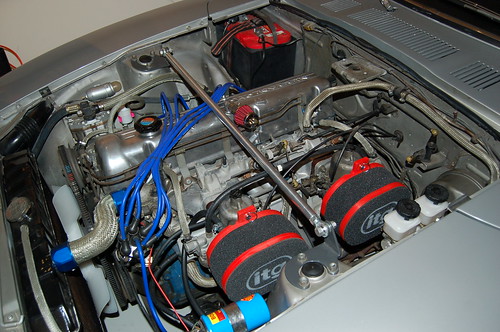
Cleaned up the engine bay a bit and reinstalled the factory orange air cleaner. Interesting Z tidbit: According to a reputable SU carb expert, the simple sheet metal air horns built into the inside of the air cleaner box flow somewhat better than any aftermarket units. Many early Z owners install non-factory air horns in pursuit of a looks and performance upgrade, but for the latter, there’s really nothing better than the orange OEM piece.

1972 72 Datsun 240Z Battery Tray Rust Rusted Out

A shot of the cause of many of the car’s issues: A rusted-out inner fender directly beneath the battery tray, up against the firewall. Driving the car in the rain, water has a direct path through the fender and firewall, down into the passenger floor pan.

I also completely removed any vestiges of the ill-advised electric fan conversion and its associated wiring, and drained the oil. The oil looked clean—there were no metallic flakes at all, but I doubt that’s conclusive as I’m sure I changed the oil immediately following the engine fire incident. I racked my brain trying to remember if there were any visible particulates in the oil then, but for the life of me I can’t recall. In any case, the engine’s coming out and going to be torn down and checked. At least it’s home. Feels good to have the Z where it belongs.

Editor’s note: This post is Part 5 of an ongoing series chronicling my efforts toward the restoration of my 1972 Datsun 240Z, originally my father’s. Read the other installments here:

7 Comments on Datsun 240Z Restoration: Coming Home

Datsun 240Z Restoration: The Rollout

November 26, 2011 by Matt

1972 Datsun 240Z Blue

Took advantage of the opportunity afforded by being at my parents’ place for Thanksgiving to discuss the situation with my dad, and to roll the car out of the garage for a bit. It’s the first time the car’s been moved in several years, and I was shocked the rear drums weren’t rusted solid, having left the parking brake engaged. We did have to put some air in a couple of the tires, and we couldn’t find the key, so the steering locked, preventing the car from being rolled out farther. But it was still nice to get a gander at the whole thing.

1972 Datsun 240Z Blue

As mentioned, I did have a chance to “unburden” myself to my dad regarding the hopelessness of being able to give the car a thorough restoration on our family budget, and was genuinely surprised when he half-floated the idea of “sponsoring” a restoration provided I do all the grunt work—which I’m more than willing and able to do—and manage the project in general. The extent of his involvement will be clarified going forward, but knowing my dad and his connection to the car, I’m fairly certain he’ll want to be involved in some capacity.

The upshot is that the Z is going to be taking up residence in its new home here within the next two or three weeks, at which point I’ll carefully develop a game plan and start tearing into it. One of the slight deviations from my “full restoration fantasy” is that certain wish-list items, like a 5-speed, disc brakes or a 2.8l bore-out (if even possible) are going to have to wait. The focus will be the body and interior, along with restoring the engine, suspension and driveline to fully-operational condition. I would, however, like to add two things in the process of bringing the car back from its current state: Headers and a full exhaust, and an air dam. Everything else can wait, and be added later. At this point, after having owned the car for 10 years, I’m just eager to see the process move forward. Wish us luck!

Editor’s note: This post is Part 4 of an ongoing series chronicling my efforts toward the restoration of my 1972 Datsun 240Z, originally my father’s. Read the other installments here:

2 Comments on Datsun 240Z Restoration: The Rollout

Datsun 240Z Restoration:
Confessions of a Poor Car Enthusiast

November 23, 2011 by Matt

901 Silver Datsun 240Z 240-Z HLS30 S30 Nissan

I finally figured it out. After two and a half years—maybe longer—I discovered the missing piece of the existential puzzle that is my “car promiscuity.”

Since acquiring my driver’s license in ’95, I’ve been through a lot of cars. But more recently, since mid-’09, I’ve made a series of car swaps I couldn’t really justify. Obviously, my automotive flexibility as a husband, dad and homeowner is radically more constrained than it was when I was single, child-less and renting. That said, ever since my car interest “reopened” in mid-’09, I’ve felt this sort of restlessness, discontent, some kind of inexorable force pulling me from one car to the next, searching for what I knew not.

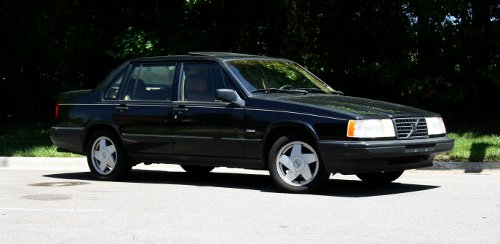
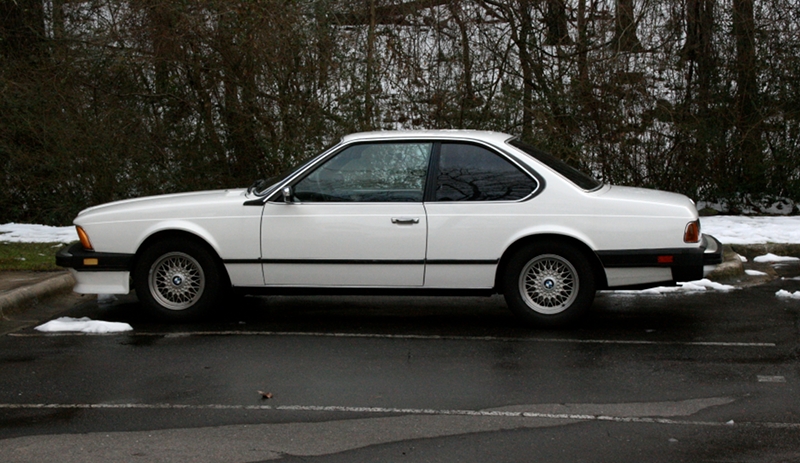
Let me explain our family’s car arrangement. We had established a while ago that there were three “slots” for cars to fill: The family hauler, the daily driver and the project car. The minivan has filled the first slot; no real drama there. The project car slot has been occupied, since late ’01, by my Datsun 240Z. The daily driver slot, in contrast, has seen a remarkable amount of turmoil and turnover. Starting in mid-’09, I’ve been through a ’93 Volvo 940 Turbo, an ’01 VW Jetta TDI, an ’86 BMW 635CSi, a ’95 BMW 525i and I had been searching for its successor. There were a veneer of practical reasons justifying the move from one to the next, but the undercurrent was the aforementioned, irrational restlessness. And it drove me up a wall. It upset my parents. It upset my wife. Why did lose interest in my current daily driver so readily and feel compelled to jump ship? What was I looking for?

The key lay with the third slot, the project car. As a car buff, I love to tinker with cars; there’s little I’d rather do than be working on them. My 240Z is in need of a full down-to-the-metal restoration, and I finally have the space in my new garage to begin the project. So what’s the problem? It’s the realization I came to earlier tonight, and it ties everything together: I will never have enough money to restore the 240Z.

I just won’t. Not the right way, at least, the way it needs to be. Between two young kids, the demands of the house and my line of work, without going into exhaustive detail, the money simply won’t be available for at least another 15 years, if ever. The realization should have been obvious, and I’m sure it was present subconsciously, but tonight was the first time it bubbled to the conscious surface and I “let myself” say it.

And knowing that, deep down, was what drove me (pun intended) from one daily driver to the next. Bereft of a long-term car project I could realistically hope to complete, I gravitated toward short-term “easy power” from my daily drivers. I wanted something that could satisfy my need to get grease under my fingernails, start for me every morning, and haul the family around if the need arose. I didn’t want to admit to myself that the 240Z project was an albatross, but the emotional needs of my hobby would not be denied, and redirected themselves toward my daily driver, creating overlap, cognitive dissonance and great frustration.

It’s difficult to overstate the magnitude of this realization. I feel like a weight has been lifted. It brings so much of my automotive angst over the past two years into focus. My mindset vis-a-vis my car interests going forward is so much more clear.

Editor’s note: This post is Part 3 of an ongoing series chronicling my efforts toward the restoration of my 1972 Datsun 240Z, originally my father’s. Read the other installments here:

3 Comments on Datsun 240Z Restoration:
Confessions of a Poor Car Enthusiast

The Engine Swap Hall of Fame:
Hilly’s Audi V8 Lotus Esprit

November 10, 2011 by Matt

Hilly Lotus Esprit S3 Audi ABZ V8 Engine Motor Swap Motorgeek

For anyone interested in wild and wacky engine-and-chassis pairings, visit the Motorgeek community Projects subforum. On any given week, there are at least two dozen projects underway involving major engine relocation (a mid-engined V8 Golf, for example), completely custom sheetmetal fabrication and insane power builds. It’s mostly Audi- and VW-related, but some non-VAG stuff does pop in from time to time.

One of my all-time favorite project threads on Motorgeek is dedicated to Hilly’s Audi 4.2l V8 and 6-speed transaxle swap into an S3 Lotus Esprit. Ditching the anemic and temperamental stock 4-cylinder engine, Hilly went for Audi’s all-aluminum unit, in the process creating a sort of proto-twin-turbo V8 Esprit, a homemade version of what the automaker would later do themselves. You can browse the whole build thread here (it’s worth the read); I’ve grabbed a few highlights:

Click here for pictures and video!

2 Comments on The Engine Swap Hall of Fame:
Hilly’s Audi V8 Lotus Esprit

The Driveshaft Dyno:
The Tuner’s New Best Friend?

November 5, 2011 by Matt

AEM Dyno-Shaft Dynoshaft Driveshaft Dyno Yoke Slip Ring SEMA

As noted on the Edmunds Best New Product overview of the annual Specialty Equipment Market Association (SEMA) show, among a host of other tuner-related websites, one of the coolest and longest-overdue innovations on display was the AEM Dyno-Shaft on-car dynamometer.

A two-part device basically consisting of sensors installed at opposite ends of a RWD car’s driveshaft, the Dyno-Shaft measures driveshaft load to accurately determine engine horsepower and torque in any given situation. In contrast to the “ideal laboratory” environment of a conventional, external dynamometer, AEM’s product can calculate real world power output during highway pulls, dragstrip launches—anywhere. It stands to really allow the tuner to optimize his vehicle for the entire operational envelope. The Dyno-Shaft won’t work for FWD or AWD cars, isn’t cheap—around a grand—and requires some custom fabrication to fit, but anyone who’s worked out the kinks of an engine swap or massive upgrade will tell you dyno time adds up quickly, and can be only marginally profitable if all your ducks aren’t in a row before you roll onto the rig. If I had a build I was really serious about, I’d strongly consider it.

3 Comments on The Driveshaft Dyno:
The Tuner’s New Best Friend?