Spannerhead Dot ComSpannerhead.com

Posts filed under ‘Tinkering’

The Engine Swap Hall of Fame:
Mark Stielow’s ’69 Camaro

September 15, 2011 by Matt

Mark Stielow 1969 Camaro

I love engine swaps. My first major car project was an engine swap between two first-generation RX-7s, and it was great fun, albeit challenging. However, even the trial of simply replacing a car’s existing engine with an identical one served a purpose: It reinforced my admiration for guys who can combine disparate engines and chassis. There aren’t many more ambitious or exiting projects for us shadetree mechanics, and guys who do it right become heroes in their respective niches of the automotive community.

Mark Stielow 1969 Camaro Engine LS7 LS9

One such hero is Mark Stielow, owner/builder of the above ’69 Camaro, as reported in Car and Driver. Beneath the legendary first-generation F-body skin, Stielow has crafted a thoroughly modern car. He has either upgraded or replaced every bit of ’60s engineering, bringing it completely into the modern era—except, of course, for the styling. The spec sheet reads like a car nut’s fantasy: Supercharged combination of LS7 block and LS9 heads, Tremec 6-speed, Truetrac LSD, Brembo rotors and calipers, hydroformed subframe, rack-and-pinion steering, coilovers all around, 756 hp. Yep, 756. The acceleration figures (4.1 seconds 0-60, 11.8 1/4 mile) won’t impress many muscle car buffs who hone their cars solely for performance at the drag strip, but consider that Stielow’s Camaro can hang with the best modern sports cars on the road course as well, and it’s completely civil and tractable around town. The bandwidth here is amazing. As the automotive equivalent of a 60-year-old decathlete, it’s almost without peer.

Mark Stielow 1969 Camaro Dashboard Gauges

Granted, it is a “money no object” kind of endeavor. Stielow obviously had the resources to select the best parts to perform his time-warp makeover on the ’69. But pigeonholing him as some kind of “credit card racer” would be an insult to the attention to detail required by the necessary fabrication, and what’s more, Stielow’s ability to fine-tune the components to work together to extract both the savagery and docility. Make no mistake—it’s one thing to bolt-on all the most expensive geegaws you can find in the catalog; it’s quite another to have the skill to get them to “talk to each other” and make the whole more than the sum of the parts. From the looks of it, Stielow has resoundingly succeeded.

Editor’s note: This post is part of an ongoing series showcasing awesome engine swaps and builds. Read the other installments here:

No Comments on The Engine Swap Hall of Fame:
Mark Stielow’s ’69 Camaro

Datsun 240Z Restoration:
Opening the Tomb

August 27, 2011 by Matt

1972 Datsun 240Z

I promised myself I’d take more pictures. During a visit to my parents’ today, I did.

Behold, my project car, a 1972 Datsun 240Z. My dad bought it new in ’72, and gave me the keys as a college graduation present. As outlined in my previous post, it has issues, some significant, but notwithstanding those I’m eager to dig into the restoration.

1972 Datsun 240Z Interior

It hasn’t moved under its own power since March 11, 2004. That was the date of the minor engine fire and subsequent operation without oil pressure for several minutes. Since then, it’s been parked in my parents’ garage, awaiting the day when I would have a garage of my own to transfer it to. That day has come, but its new home isn’t quite ready yet—some organization is still required. So it’s still gathering dust, 90 minutes away.

1972 Datsun 240Z Rusted Out Passenger Floorpan

Here’s the major issue: Rust has completely consumed the passenger side floor pan and frame rail underneath. The driver’s side is fine, so why did its counterpart fare so poorly? Simple: The battery tray is smack up against the firewall on the passenger side of the car. Over the years, uncleaned battery acid ate a hole in the tray, the inner fender beneath, and the firewall itself. With all those panels swiss-cheesed, rainwater had a more-or-less direct path through the firewall and down into the floor pan, where it sat and oxidized the metal. It looks awful; I know, but again, my only hope is that I’ve seen Z-car floor pans and frame rails restored from even worse states of decay.

1972 Datsun 240Z Engine Bay L24

The L24, a 2.4l SOHC inline-6. Lovely engine. The orange, oval air cleaner assembly is in the trunk at the moment. You can see a few of the “modifications” I made prior to the car’s stasis: Air pump removed, air injection system capped off and other emissions garbage pulled from the balance tube, and an electric fan (stupidly) added to replace the stocker, whose fan clutch had seized. The carbs were rebuilt by ZTherapy in the late ’90s and have the ball bearing throttle shafts. Overall, the engine cleans up well. I just need to tear it down and inspect the internals as a matter of course.

All in good time.

Editor’s note: This post is Part 2 of an ongoing series chronicling my efforts toward the restoration of my 1972 Datsun 240Z, originally my father’s. Read the other installments here:

10 Comments on Datsun 240Z Restoration:
Opening the Tomb

Heart Transplants

August 14, 2011 by Matt

SBC Engine and 1st-Gen Miata

Let’s clear the air. After ages participating in car communities of many different makes and models, online and otherwise, I’ve come to the conclusion that there’s no more contentious issue than the idea of doing a cross-make engine swap; in other words, of swapping into a particular car an engine from a different make.

Examples abound and usually, but not always, involve dropping some flavor of American V8 into a lightweight or otherwise desirable import body:

  • Small-block Chevy V8 into RX-7
  • Ford V8 into Mazda Miata
  • SBC into Jaguar XJ6 or XJS
  • Toyota 1JZ into Datsun Z-car

For what it’s worth, it’s not a new phenomenon—professional tuning outfits and even OEMs have been splicing disparate powerplants and chassis for donkey’s years. The AC Cobra, De Tomaso Pantera and Ultima GTR have rightly become the stuff of legend; the cars may have had their flaws, but without the easy availability and modularity of the engines (and the ingenuity of the designers), the aforementioned cars wouldn’t have seen the light of day. More than that—the engine and body each supplied something the other lacked and created cars that were more than the sum of their parts.

So what say you? Is a cross-make engine swap acceptable, and if so, under what circumstances? Is the union between factory engine and chassis sacrosanct; that character inviolable? And if you would never, ever, desecrate a car by shoehorning an engine of a different persuasion under the hood, what about another engine of the same make—say, a BMW V8 into an E24 6-series, or a Nissan RB26DETT into a 240Z? Do you take a stand for a car’s purity, or simply choose the best tool for the job?

No Comments on Heart Transplants

Datsun 240Z Restoration:
Projecting Forward

August 7, 2011 by Matt

1972 Datsun 240Z in garage

Here’s the situation. I own three cars: my BMW daily driver, the family workhorse minivan and my project car, pictured above (it’s the only picture I presently have). It’s a 1972 Datsun 240Z. And it resides in my parents’ garage, 90 minutes away.

Here are the facts about it:

  • My dad bought it new in ’72, and gave me the keys as a college graduation present in late ’01. It’s something of a family heirloom, so selling it is out of the question.
  • Part of the reason he gave me the keys was that I enjoyed working on it so much. Before the passing of the baton, I’d taught myself to rebuild and synchronize the twin SU carburetors, adjust the valve clearances, and do a full tuneup. I’d replaced both the brake and clutch master cylinders as well as the rear drum brake cylinders, and removed the ancient and inoperative dealer-installed A/C system. I love tinkering with the old 2.4l SOHC inline-6, and the car’s electrical system wiring diagram spans, in its entirety, a whopping two pages—meaning the car’s electrical system is admirably simple to diagnose and fix. And not made by Lucas.
  • The car needs a full down-to-the-metal restoration. The passenger side floor pan is rusted through, the battery tray is eaten away, the firewall has holes in it, and I can push my finger through what’s left of the rocker panels. It’s pretty far gone, and my only reason to think the car isn’t destined for the scrap heap is the fact that I’ve seen 240Zs completely restored from being even farther gone than mine is. The body style was popular in its day, had a long 8-year model run, and replacement panels are readily available. And I have faith in miracle-working powers of good body men.
  • The engine quite possibly needs an overhaul, if not total rebuild. Some years ago, due to a combination of circumstances, I ran the engine with zero oil pressure for about 3-4 minutes, and it’s never been quite the same since. If nothing else, it probably needs the mains replaced and cylinder bores honed. Of course, none of this is terribly difficult with the engine out of the car, which it will be during the body’s restoration.

So here’s the question: In addition to restoring it, what should I do with it? There are a number of possibilities:

  1. Keep it as stock as possible. Given that, as noted above, the car is something of an heirloom, there’s a certain appeal in leaving the car “numbers matching,” or at least ensuring the body’s and engine block’s serial numbers match up, even if I do install some aftermarket bits like headers or uprated suspension and wheels.
  2. Install an L28 (2.8l iteration of the 240Z’s engine) with either triple Weber carbs, or keeping the stock SUs. Click here to view an example of that combination in action. The power bump over the L24 would be healthy, and the setup wouldn’t have the complexity of a turbo, but would have the downside that the engine wouldn’t be original to the car.
  3. Drop in and tune an L28ET, the factory turbocharged version of the Datsun/Nissan L-series engine. Here’s an excellent video of that setup. It’s a fairly straightforward swap; the motor mounts and drivetrain bits match up, the only custom fabrication required would be the engine management and peripherals like the exhaust and intake piping.
  4. Go nuts and install a completely different engine, like a small-block Chevy V8, SR20DET (Nissan 4-cylinder turbo), RB25DET (Nissan 6-cylinder turbo), 1JZ-GTE (Toyota 6-cylinder turbo) or Mazda rotary (not sure if this has ever been done). Advantages include the cool/interest factor and power potential; challenges are legion and include just about everything you can imagine, from sourcing an engine in the first place to all the custom adaptation required.

Any thoughts? I’m leaning toward Project Path No.1, but the lure of boost is difficult to resist. Whatever the case, when the car finally arrives and I begin tearing into it, barring any “unforeseen acquisitions,” the Z will officially be the first Spannerhead.com Project Car™. Stay tuned.

Editor’s note: This post is Part 1 of an ongoing series chronicling my efforts toward the restoration of my 1972 Datsun 240Z, originally my father’s. Read the other installments here:

9 Comments on Datsun 240Z Restoration:
Projecting Forward

Cherry Picking

July 12, 2011 by Matt

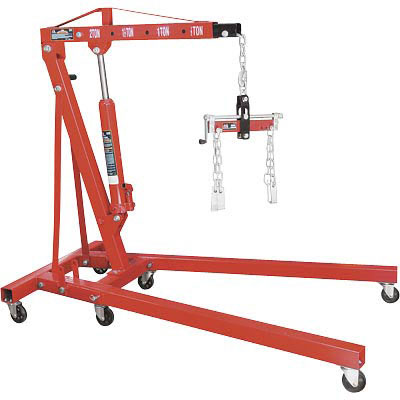
Engine Hoist

Now that we own a home with a garage, as part of my ongoing effort to transfer all my tools and assorted car items out of my parents’ garage and into ours, my dad delivered my engine hoist last Thursday.

It’s one of those tools I’ll probably only use half a dozen times, if that, but it still feels good to have in my garage. I don’t mind it taking up space. I think it’s a “comfort tool,” a tool that I rarely use, but enjoying knowing I have the capability to do what it allows me to do. Or maybe it’s the thought that it allows me to do what I’d like to do, even if I don’t have the time or money to undertake such a project (in this case, pulling the engine out of my Datsun 240Z as part of a restoration effort). It’s one more piece of the project puzzle, in other words—a known quantity. I had a Harbor Freight gift card at the beginning of the year, and contemplated buying a hydraulic press, knowing that it would probably become a comfort tool as well. But in the end, logic won out, and I bought, among other things, a radial arm saw, which I use on a weekly basis. Wearing that thing out.

Fortunately, in contrast to the limited versatility of the engine hoist, some tools exhibit that happy convergence in that they’re both inexpensive and incredibly useful. My favorites include:

Telescoping Magnetic Wand

My telescoping magnetic wand. $1.50 and it has literally saved me hours of frustration. The first time you drop a radiator bracket bolt down into the bottom of the shroud, or a door card screw into the bottom of the door structure, you’ll be singing its praises, knowing how much you would have had to disassemble had it not been handy.

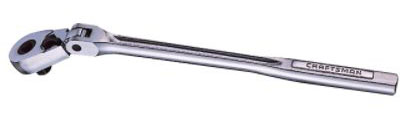
Swivel-Neck Socket Driver

My swivel-neck socket driver. Despite the fact that its name is really fun to say, some don’t like its “wobbly” feel when they have to deliver a lot of torque to a fastener. I’ve rarely had an issue with that, though, and the ability to bend the handle 90° and treat it like a fast crank once a bolt breaks free—priceless.

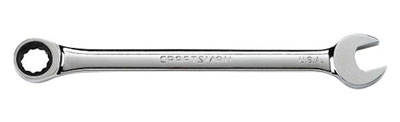
Ratcheting Box-End Wrench

My ratcheting box-end wrenches. Now, these aren’t particularly cheap, but in my opinion, they’re worth their weight in gold for situations where a socket is too bulky, and a regular wrench would take tediously long to loosen a nut. And they’re just good for general tinkering, even in situations where their unique abilities aren’t required.

The next tool on my to-buy list is a small air compressor and tank. Just brainstorming what I could do with it, I have a feeling it won’t be a comfort tool.

2 Comments on Cherry Picking