Spannerhead Dot ComSpannerhead.com

Captivatingly Curvy:
New Alfa Romeo Disco Volante

March 7, 2012 by Matt

Alfa Romeo Alpha Disco Volante Concept Carrozzeria Red

Okay, as a designer, I can’t not discuss this one.

That name, too… If only it had one of these so I could tell people I drove a Disco Volante with a Laycock de Normanville overdrive, my life would be complete.

But I digress.

Technically, the new car isn’t a real Alfa Romeo, owing to the fact that the Italian automaker didn’t actually design the car (design consultancy Carrozzeria Touring Superleggera did), but simply donated the foundation in the form of the chassis from their sadly limited-run 8C Competizione, including that car’s 444-hp, 4.7l V8 engine. So the Disco Volante is more than just a pretty face—it can move and groove.

Alfa Romeo Alpha Disco Volante Concept Carrozzeria Red

When it comes to the styling, Alfa has no shortage of jaw-droppingly gorgeous cars from which to draw inspiration. For their latest effort, though, Carrozzeria decided to pay homage to perhaps the quirkiest of the legendary racing Alfas: The 1900 C52, affectionately known as the original Disco Volante, or flying saucer. The Jalopnik article links to this page featuring photos and a description of the original; do yourself a favor and visit the page just to soak in the fascinatingly rounded body.

So, on the one hand, it’s a shameless ripoff of the original; on the other hand, the original was so otherworldly-looking (literally!) that any homage can’t help but look fresh amid the modern-day crop of bland and stale automotive shapes. I particularly love details like the way the beltline extends through the front wheel arches, and the classically-Alfa-like resolution of lines in the rear into a sort of boattail. In a weird way, especially given its quasi-supercar underpinnings, it fits in perfectly with the recent rash of “re-engineered classics” like the Singer Porsche and Eagle Speedster, despite the fact that the Disco Volante’s bodywork is bespoke and the others are more directly lifted from their forebears. And if this latest Alfa is a typical example of the trend of fusing old-school style with modern running gear, I hope the fad continues.

5 Comments on Captivatingly Curvy:
New Alfa Romeo Disco Volante

Choice Circuits: Spa-Francorchamps

March 6, 2012 by Matt

Spa-Francorchamps Circuit Track Map Layout Diagram Schematic Belgium Belgian GP Grand Prix F1 Formula 1

Let’s talk about Spa for a bit. Yesterday’s post featured a clip showcasing the track’s most famous corner, the Eau Rouge / Radillion combination, but the whole circuit is noteworthy for a number of reasons, not the least of which is the fact that, as mentioned, many prominent Formula 1 drivers have ranked it among their very favorites.

Located in the Francorchamps suburb of Spa, Belgium (hence its name), an F1 victory at the circuit doesn’t hold quite as much prestige as a triumph at Monaco or Monza, in spite of its popularity among the drivers. That said, there are few tracks with a more distinctive layout, looking as it does like a kind of gun. It is to F1 circuits what Orion is to constellations: An instantly-recognizable figure. Measuring nearly 4.5 miles in length, Spa is also one of the longest F1 circuits, and the Belgian Grand Prix runs for a fewer number of laps (only 44) than other races on the calendar in order to reach a preset race distance. Spa is a fast track as well, with only two slow corners, the rest consisting of straights or long, sweeping bends. Apart from the aforementioned Eau Rouge corner, the backfield of the circuit, from Rivage on, can be exceptionally enjoyable for drivers who establish a kind of rhythm through the succession of high-speed esses.

All in all, a fantastic track, and one that’s maintained its status as one of F1’s premier venues through all the regulatory upheaval of the past 20 years or so, having undergone notably few alterations compared to other circuits such as Silverstone. As far as I know, only the Chicane has been significantly reprofiled (previously it consisted of a pair of back-to-back chicanes and was named Bus Stop), the rest of the track layout remaining largely the same.

Watch the clip below as Jenson Button delivers a flying lap in his ’04 BAR-Honda:

Editor’s note: This post is part of an ongoing series discussing legendary and notable racing venues from around the globe. Read the other installments here:

2 Comments on Choice Circuits: Spa-Francorchamps

The Speed of Formula 1:
An Utterly Different Reference Frame

March 5, 2012 by Matt

F1 Formula 1 Onboard On Board In Car Cockpit Driver Renault

I thought of the idea for this post the other day, just running errands with the kids in the back of the minivan. Pulling away from a stoplight, all the cars accelerated at roughly the same rate, and I thought, “There’s an expected g-force envelope that all cars fall into, more or less.” It’s true—even high-end sports cars with hundreds more horsepower than our lowly van still only “turn it up” a few notches over the average family sedan. They still play by the rules, so to speak; they’re just really good at the game. Driving or riding in one is fun and impressive, to be sure, but the experience isn’t different enough from an ordinary commute that it’s something our brain has trouble relating to.

And then there’s F1. Play the above video, if you haven’t yet. The location is the famous Eau Rouge corner at the Spa-Francorchamps circuit in Belgium, a track many famous F1 drivers have listed as a favorite.

In the left frame, track-prepped sports cars navigate down the hill, around the bend and up the hill to the Kemmel straight. Were any of us to ride shotgun, we’d feel g-forces throwing us around in our harness as the car skirted around the edges of the traction circle. It’d be fast and violent, but we’d still be able to keep our wits about us.

The right frame, on the other hand, holds a different world. Late model Formula 1 cars literally blast through the bend in a fraction of the time it takes the already-capable “regular” race cars to make it through. It’s just…I can’t even conceive of what it must feel like to be behind the wheel. Neither my daily commute nor even the most extreme “automotive situation” I’ve ever experienced offer me any kind of framework for understanding that kind of speed, that power, that neck-breaking grip… When I first saw the clip, I was sure the F1 half was sped up, but no; it’s real-time.

Watching F1 on television, it can be easy to become numb to the otherworldly racing environment F1 cars and drivers inhabit. Viewing a clip like the above is something of a reality check, and if anything, increases my esteem for the athletes that participate in the sport.

5 Comments on The Speed of Formula 1:
An Utterly Different Reference Frame

Chevy Code 130R:
Where’d This One Come From?

March 4, 2012 by Matt

Chevy Chevrolet Code 130R Red

Seriously. There’s no precedent here.

One of the stars of last month’s Detroit Auto Show is the car pictured above: The oddly-named Chevy Code 130R (code for what?). A lightweight front-engine rear-driver with punchy, masculine proportions, it reads like a stripped-down BMW 1 Series for the younger set.

Equipped with an optional 6-speed manual transmission and powered by a 150-hp 4-banger (with a hybrid “boost” system good for another dozen or so horsepower), the Code 130R won’t be buckling pavement anytime soon. That very fact, however, is what makes it so surprising this car has emerged from Chevy. Sure, their Corvette Z06 and ZR1 are track dominators, and the Camaro ZL1 acquits itself quite well in the twisties, so it’s fair to say the automaker can put together cars that can handle, but I can’t recall that they’ve ever developed a concept that adheres to the lower-power + lightweight + RWD formula. No, in every previous instance, good-handling Chevys—or GM cars in general—were invariably the ones given a massive engine, and didn’t necessarily prioritize low weight. But recently, Chevy, in an effort to plant their flag in the youthful sports coupe market segment, needed a response to the Scion FR-S / Subaru BRZ twins, and serendipitously, Cadillac was in the midst of developing a brand new smaller RWD platform for their new BMW 3 Series fighter, the ATS. Chevy seized the day, truncating the platform to underpin the Code 130R. It’s fair to say, then, that in this case they were saved by Cadillac’s recent Great Awakening to the wonders of RWD + good handling, since otherwise Chevy probably would have just tarted up the Malibu with sporty-looking duds and tried to pass it off as a real threat to its Japanese competition.

Chevy Chevrolet Code 130R Red

The icing on the cake here is the styling. As bad as the Camaro’s is, the Code 130R’s styling is good. It’s just a delightful car to behold. It’s distinctive without being tacky, the lines are confident without being overdone, and best of all, the proportions are the real drivers of the car’s design, not ticky-tack decoration, as in years past. And the whole car carries uniquely Chevy overtones. I’m honestly so shocked that the Code 130R wears a bowtie that I’m tempted to ask which closet the Chevy designers and engineers were locked in during its development. The car hasn’t yet been green-lit for production, but there’s so much promise here. It’s a great place for Chevy to start—finally.

9 Comments on Chevy Code 130R:
Where’d This One Come From?

Upcoming Buick GNX: Another
Storied Nameplate to be Sullied

March 2, 2012 by Matt

Buick SLP GNX Regal GS Concept Sketch Teaser

It’s like what Pontiac did to the GTO, only worse.

Motor Authority reports that tuner SLP plans to revive Buick’s legendary GNX designation, applying it to a breathed-upon variant of the automaker’s current Regal GS. Mercifully, they’ve only planned to build around 500 of them, close to the painfully low number of the original that were produced.

To understand why this is such a travesty, consider a couple of things:

  1. The original GNX was the ultimate rip-snorting, ground-pounding, take-no-prisoners incarnation of the already-fearsome Grand National. It was, first and foremost, a muscle car. It may not have been V8-powered in the classic tradition, but its turbocharged V6 radiated torque in its own right. And it was RWD, sported a live rear axle, dripped with testosterone and was singularly intimidating to line up next to at a stoplight or drag strip.
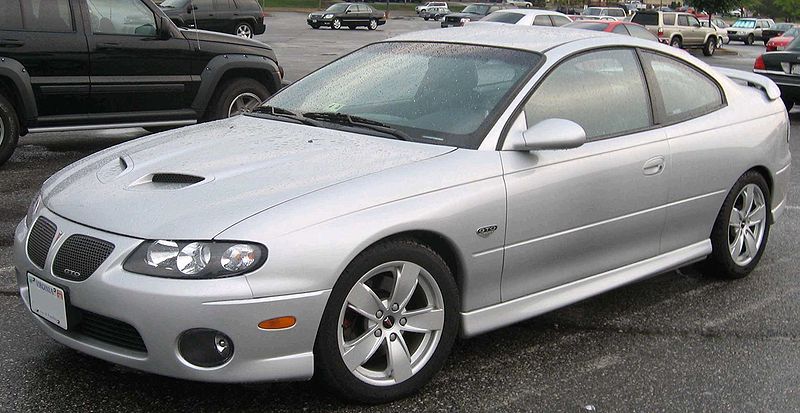
  2. Back in ’04, Pontiac attempted to revive their legendary GTO badge by slapping it on a car called the Monaro, imported from their Australian subsidiary Holden. While the new GTO possessed good credentials on paper—a small-block V8 lifted from the outgoing Camaro and RWD—it utterly failed to catch on. Its timing was off by several years, for one; the new generation of muscle cars wouldn’t crop up until the emergence of the Dodge Challenger and especially the new Ford Mustang. But more significantly, although the mechanicals were on point, the sheetmetal was jellybean-like and inert, with absolutely none of the swagger befitting a proper muscle car.

And with the new GNX, history threatens to repeat itself as SLP prepares to water down yet another revered nameplate by affixing it to a very un-muscle-y sports sedan built on a FWD platform. A little nostalgia mining I can handle, but the new car must faithful if not to the original’s concept, at least to its general attitude. I really can’t see any possible way for SLP to re-cast the Regal GS in the mold of the ’80s GNX. It’s just not going to work.

3 Comments on Upcoming Buick GNX: Another
Storied Nameplate to be Sullied

Which Would You Buy?
Lotus Elise vs. Caterham 7

March 1, 2012 by Matt

Lotus Elise Federal Gray Grey Silver Gunmetal

Call this “The Battle of the Track Toys.”

Both the Lotus Elise and Caterham 7 prioritize light weight and simplicity as a means to performance over raw power and grip. Both cars are British in origin. And both feature off-the-shelf 4-cylinder engines sourced from other manufacturers, the Lotus’s from Toyota and the 7’s procured from Ford.

Beyond that, the two cars differ in notable ways. The Elise, while a bit less hardcore than the Caterham, is far more attractively styled, its rival not having undergone any significant sheetmetal revisions in 40+ years. The Lotus’s independent rear suspension is more modern than the 7’s ancient De Dion setup. And the Elise offers its occupants an actual roof and glass windows, among other amenities, and so could function at least adequately as a daily driver.

Caterham 7 Lotus Silver Grey Gray

For its part, as elemental as the Lotus is, if it’s a thoroughly visceral connection with the road you’re after, the Caterham is in a class by itself. At two-thirds of the Elise’s already light 2,000 lb weight, the 7 takes the Lotus’s formula to its logical end (no coincidence that the 7 started life in the ’50s as the Lotus 7, designed by company founder Colin Chapman). It delivers a tactile driving experience like few other cars can. Not only that, but for we shadetree mechanics, the fact that the Caterham comes it kit form conjures up scenes of garage-dominating, construction-related bliss. For some, that aspect of the 7 might generate trepidatious emotions, but for me in particular, the idea of building an all-conquering track car myself sounds like a little slice of heaven.

So perhaps the real question is: How “extreme” do you want your track toy to be? Do you want it “dialed up to 11,” a DIY project with few eventual concessions to everyday practicality? Or would you like to be able to use your weekend weapon on more than just sunny days, even if that takes a bit of the edge off?

Editor’s note: This post is part of an ongoing series wherein I stack up the pros and cons of two broadly similar cars from an ownership perspective. Read the other installments here:

1 Comment on Which Would You Buy?
Lotus Elise vs. Caterham 7

New Ferrari F12 Berlinetta:
An Awesome Mess

February 29, 2012 by Matt

New Ferrari F12 F12B Berlinetta Sports Car GT Red

Well, at the risk of OD’ing on Ferrari this week, here it is, officially: The new F12 Berlinetta.

It seems the actual car matches pretty closely with the spy shot leaked a few days ago, complete with an aggressive, FF-like grille, dramatic BMW Z4-ish “flame surfacing” adorning its flanks, and amped-up rear haunches lifted from an Aston Martin. The technical specs are awesome—in both the classical and vernacular sense of the word—a 6.3l V12 delivers 730 hp through a 7-speed dual-clutch transaxle, enabling the 3363-lb F12B to inhale 60 mph from a standstill in 3.1 seconds on the way to a claimed top speed of 211 mph. Hugely impressive, but strangely numbing, given the number of exotics on the market capable of matching, if not the horsepower number, then certainly the performance figures. Above a certain level, the cars’ capabilities are so far removed from our frame of reference that we might as well be discussing fighter jets. Yes, that kind of “above the fray,” higher-plane prowess is partially what supercars are all about, but when the new “supercar fray” is as saturated as it is, the numbers lose some of their impact. But again, that’s a post for another day.

New Ferrari F12 F12B Berlinetta Sports Car GT Red

Another part of the supercar equation is visual impact, and the F12B has it in spades. I can’t think of another car that would be so readily identifiable at a distance; you’d know it was a Ferrari, and specifically an F12B, half a mile away. But is the new exotic beautiful, or even attractive? The Spannerhead verdict: No. As alluded to above, the styling amounts to a 3-D crib sheet of other cars’ distinctive features draped over classic front-engined GT proportions. Is Pininfarina running out of ideas? Have they painted themselves into a corner, styling-wise, unable to create a shape at once new and fresh and plainly beautiful? Who knows. As it is, the F12B definitely inspires awe, and engenders respect, but desire… The jury’s still out.

2 Comments on New Ferrari F12 Berlinetta:
An Awesome Mess

The Aesthetics of Racing: Ferrari 412T

February 28, 2012 by Matt

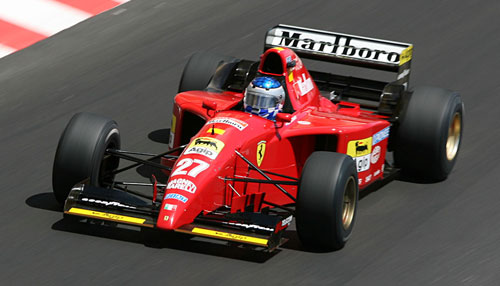
Ferrari F1 Formula 1 One 412T1 1994 1995 94 95

As much as automakers (especially those in the performance business) would like you to think otherwise, 95% of any road car’s external shape is driven by style. The aerodynamicists may have a bit of input around the edges, and there are certain interior volumes dictated by marketers and engineers, but by and large, style rules the roost.

Race cars, on the other hand, are designed and built with no concern over whether or not a pleasing shape results. If severe, brick-like contours will help it “do the job” and cut through the air faster on its way to a win, those are the priorities that shape the car. That said, in spite of the fact that form overwhelmingly follows function in the auto racing world, stunning and often beautiful bodywork frequently emerges from the engineers’ drawing boards. Today we begin a new series looking at race cars that, successful or not, in their single-minded pursuit of speed, happened to be visually arresting as well.

The Ferrari 412T, campaigned by the storied Italian team during the ’94 and ’95 F1 seasons, with Gerhard Berger and Jean Alesi at the wheel, was the last hurrah for the Ferrari V12 in Formula 1. After turbocharging was banned starting with the ’89 season, teams had reverted to naturally-aspirated 3.5l V8s, V10s and V12s, Ferrari being the last holdout for the latter configuration. Compared to its competitors, the Ferrari engine was more powerful, offering more straight-line speed, but was heavy and complex, impeding handling and making reliability an issue.

Still, the 412T undoubtedly represented the beginning of Ferrari’s comeback after the championship drought of the ’80s and early ’90s, a resurgence that culminated with Michael Schumacher’s string of 5 world titles starting in 2000. Conservative and simple, the 412T also happened to be quite a beautiful car, and its shape, along with Ferrari’s underdog status that year, secured my fandom for the seasons that followed.

Ferrari F1 Formula 1 One 412T1B 412T2 1994 1995 94 95 Jean Alesi

In a constant state of development throughout the ’94 and ’95 seasons, the 412T appeared in two primary external shapes, the switchover happening partway through the ’94 season. The first iteration was called the 412T1 (shown at top) and featured a raised, rounded nose and smaller sidepod air intakes. The 412T1B and 412T2, the latter pictured above driven by Jean Alesi, eliminated the raised nose and greatly enlarged the sidepod intake area. Coupled with the knowledge that they’re sporting a hugely powerful, classic Ferrari V12, either variation of the 412T shape is brutally elegant and completely stunning. In my mind, it’s the last “classic” Ferrari F1 car, its immediate successor the F310 and all the cars that followed being maimed by safety and regulatory changes, and looking far too computer-designed as well. The 412T was the swan song of the organic, assembled-by-an-actual-human Ferrari F1 car, and as such it stands alone.

Editor’s note: This post is part of a series examining the aesthetic merits of cars designed almost wholly with function in mind. Read the other installments here:

2 Comments on The Aesthetics of Racing: Ferrari 412T

Technical Curiosities: The Sleeve Valve

February 27, 2012 by Matt

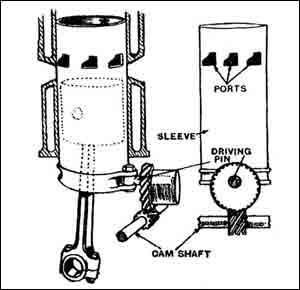
Knight Sleeve Valve Engine Motor

This technical curiosity is a personal favorite of mine. Used a few high-end pre-WW2 cars, the sleeve valve was far better known for its exploits during the war inside a number of renowned aero engines developed by the British firms Napier and Bristol.

A different method of controlling intake and expulsion of the air/fuel mixture, the sleeve valve system dispenses with conventional valvetrain, including poppet valves, spring, rocker arms and pushrods. Instead, a cylindrical sleeve nestles between the piston itself and the wall of the engine block. The sleeve rotates and moves vertically, its motion controlled by a shaft driven off the crankshaft further down in the block. Ports in the side of the sleeve admit the mixture and allow exhaust gases to be expelled in sync with the movement of the piston, and a conventional spark plug in the roof of the combustion chamber provides the ignition source.

The sleeve valve was a solution to the difficulties posed by conventional poppet valves of the pre-WW2 era. Metallurgy being in a more primitive state then than now, the internal sealing of most engines was less than ideal, and virtually all engines burned a degree of oil as a matter of course, whether they used poppet or sleeve valves. Before advances in sealing that would later vault poppets past sleeve valves in engineers’ consideration, sleeves presented a number of important advantages over their counterparts.

Sleeve Valve Engine Motor Schematic Diagram Drawing Operation How It Works

Without the inertial restrictions of spring-actuated valves, the engine can spin much faster without worrying about valve float and piston-to-valve contact. Also, with careful shaping of the ports, intake and exhaust timing can be precisely controlled, and port area can be much greater than with poppets, unrestricted by the size of the combustion chamber ceiling. Without 2-4 valves per cylinder, the valvetrain is greatly simplified, and the spark plug can be located in the optimum location in the combustion chamber, unencumbered by valves.

Given these major advantages, why aren’t we all driving cars with sleeve valve engines? Sealing. As with the rotary engine, sealing is and will always be the major difficulty of the sleeve valve engine. Not only do the piston rings have to fit tightly against the inside of the sleeve, the outside of the sleeve itself must press up against the block wall. And given that all these parts move relative to each other, they must be lubricated, and some oil leakage into the combustion chamber is virtually guaranteed. As mentioned, during the engine’s heyday, poppet engines were just as bad, so there were virtually no downsides to the sleeve valve engine, but after the war, great strides in materials and processes allowed poppet valves to trump sleeves, sealing-wise, and the sleeve valve engine faded away. It’s a shame, really; given consistent development time, the engine might have overcome its issues, and blossomed into the superior configuration, since it is a fundamentally more efficient design than engines on the road today.

Editor’s note: This post is part of an ongoing series spotlighting obscure automotive engineering solutions. Read the other installments here:

1 Comment on Technical Curiosities: The Sleeve Valve